

Marianne L. Saberon-Abalayan
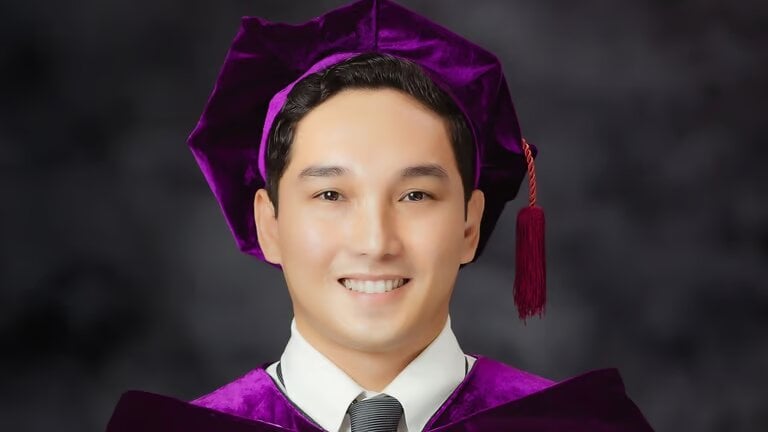
On December 5, 2023, at noon in Davao City, Juan Antonio Mendoza, a swimmer from Davao City, couldn’t contain his anxiety, causing his hands to shake. Unaware of his hunger, he eagerly awaited news.
The Davao City swimmer’s unease vanished in an instant when a private message arrived from one of his University of Southeastern Philippines (Usep) Law underclassmen who managed to access the Supreme Court website, shared the news that Antonio’s name was among the successful bar examinees.
In a burst of joy, Antonio shouted, joined by his father, Lionel, and brother Vince. His mother, Antoinette, couldn’t hold back tears. The Mendoza family’s living room transformed into a scene of pure celebration as Juan verified his name on the livestream.
“When I knew I passed, I felt so happy that I shouted and jumped. I couldn’t believe that I made it. I savored that moment of extreme happiness, and then I felt a sense of relief. I felt my worries go away and I just felt relief,” said Antonio, who graduated with a bachelor’s degree in Agribusiness Economics at the University of the Philippines (UP) Mindanao in 2019.
He dedicated his achievement to his grandfathers, who had always desired to have a lawyer in the family, and to his parents, who unwaveringly believed in his capabilities.

The preparation
The accomplished 24-year-old swimmer opted for a self-study approach in preparation for the Bar exam.
Juggling work commitments, he devised a daily routine, mindful of not overburdening himself with prolonged study sessions.
His schedule involved working in the morning, dedicating the afternoon to study, squeezing in a brief exercise session, and resuming his studies in the evening.
He grappled with mentally and emotionally readying himself in the days leading up to the Bar exam. The mounting nervousness became palpable as the exam approached.
He said, “Fortunately, I was able to sleep well, but I get really anxious during the day because I didn’t know what to expect, and I constantly doubted whether I was ready to take it or not. A huge help during the days leading up to the Bar exam was the support I received from my family, friends, and the Usep School of Law community.”
Acknowledging the constraints of his demanding schedule, he admitted that law school during the pandemic left little time for his passion for swimming.
Reading consumed much of his day, but whenever possible, he seized the opportunity to swim, allowing a brief respite from his rigorous routine.

Swimming
Swimming has been a significant aspect of Antonio’s life, having clinched gold medals in the 2018 Philippine National Games (PNG) in Cebu and the 2017 State Colleges and Universities Athletic Association (Scuaa) National Meet.
He said swimming was pivotal in benefiting him physically, mentally, and emotionally.
“Physically, swimming kept me fit and was a great stress reliever. Mentally and emotionally, swimming taught me that there are always good days and bad days, but every day is an opportunity to learn.”
He approached each day without expecting perfection, recognizing that setbacks were inevitable.
Whether facing exam failures or challenging recitations, Antonio embraced each experience as a chance to learn and continually improve. MLSA


Source: https://www.sunstar.com.ph/davao/sports/davao-swimmer-now-a-lawyer
Stories
Philippines is in the heart: A Japanese Filipinologist writes a book on the import of Magellan’s voyage
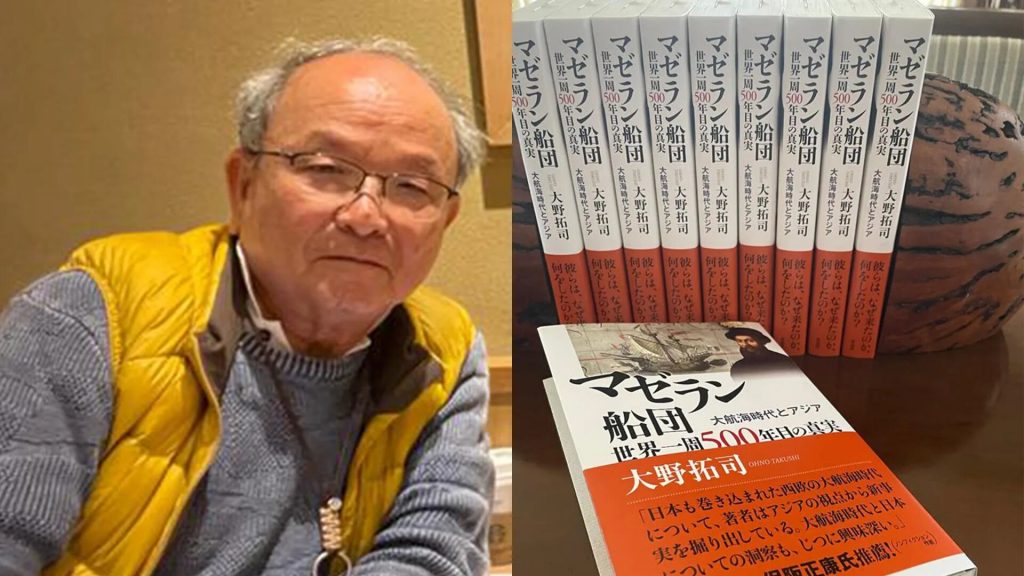
Takushi Ohno, a retired journalist and head of the UP Alumni Association-Japan chapter, writes a new book that also shows why the Philippines is in his heart
MANILA, Philippines – A Japanese Filipinologist has published a new book that revisits the story of Ferdinand Magellan’s circumnavigation of the globe, adding another title that contributes to the mutual understanding and friendly relations between the Philippines and Japan.
Scholars play a key role in bridging ties between countries as their teachings and outputs – books, research papers – are used by students and policymakers, and this latest book by retired journalist Takushi Ohno is no exception.
The book, The Truth Behind the Circumnavigation of the Magellan Fleet after 500 years, written in Japanese, tells readers about the perilous but historic voyage that first discovered a route around earth.
The book takes off from Ohno’s 16-part series for the 500th anniversary in 2021 of the arrival of Ferdinand Magellan’s fleet in the Philippines, published by the Japanese language news outfit, Daily Manila Shimbun.
An English translation of the series is available online via a subscription to Daily Manila Shimbun. While the series focused on the Philippines, the 280-page book builds on it by taking up Philippine relations with Japan, China, and other countries in the Asia-Pacific region.
“My book is not for students but for general readers who know little about the Philippines. I wrote this book in order to introduce history, people, society and culture of the Philippine islands at the occasion of Magellan’s 500th anniversary,” Ohno said in an e-mail response to questions from Rappler.
Ohno is known in Philippine history circles for his first book, War Reparations and Peace Settlement: Philippines-Japan Relations 1945-1956, published in English by Solidaridad Publishing House in 1986. It’s an authoritative material that explains the negotiations on the war reparations, and how the Philippines ended up with much less than what it demanded despite having the most World War 2 casualties among countries in Asia outside of Japan.
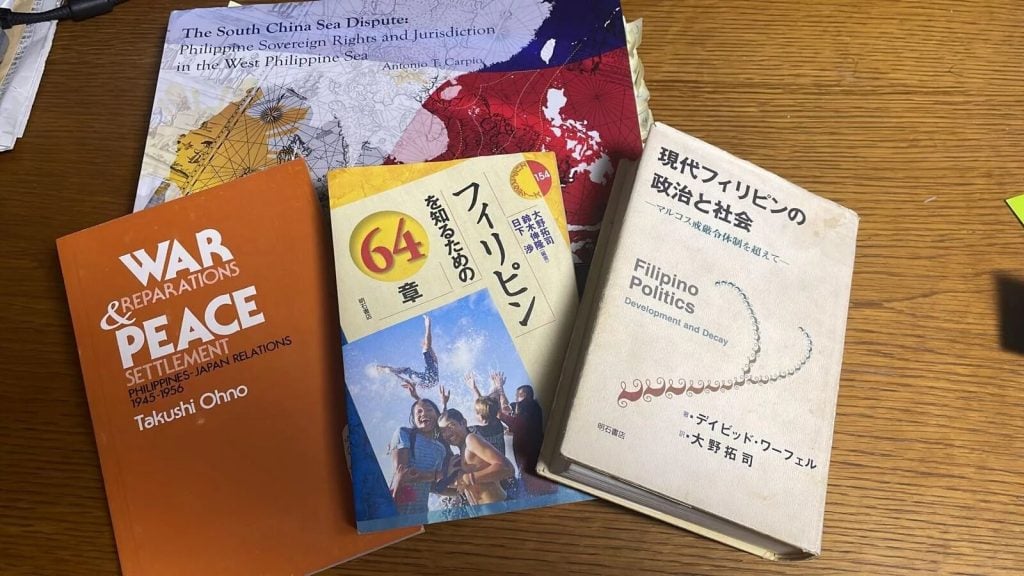
He has also translated Filipiniana books into Japanese including Carmen Pedrosa’s The Untold Story of Imelda Marcos (1969), David Wurfel’s Filipino Politics: Development and Decay (1991), and retired Supreme Court Justice Antonio Carpio’s e-book The South China Sea Dispute: Philippine Sovereign Rights and Jurisdiction in the West Philippine Sea (2017). He is also co-author and editor of the Japanese book, 64 Chapters for Understanding the Philippines (2016).
Second home
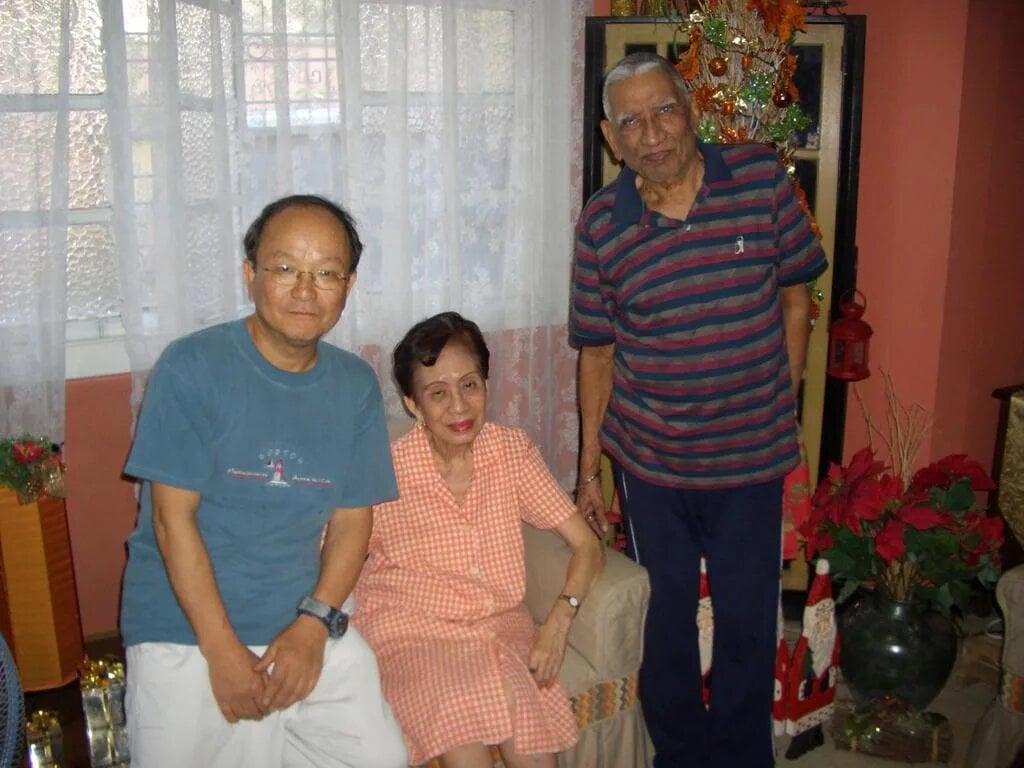
Ohno, now 75, has the Philippines in his heart due to the many friends he has made here after living here for 10 years. Manila is where he met his wife, Yurie, a music teacher sent by the Japanese government in the seventies to tutor in the Manila Japanese school. Ohno was then a part-time Japanese language teacher to Filipinos at the school.
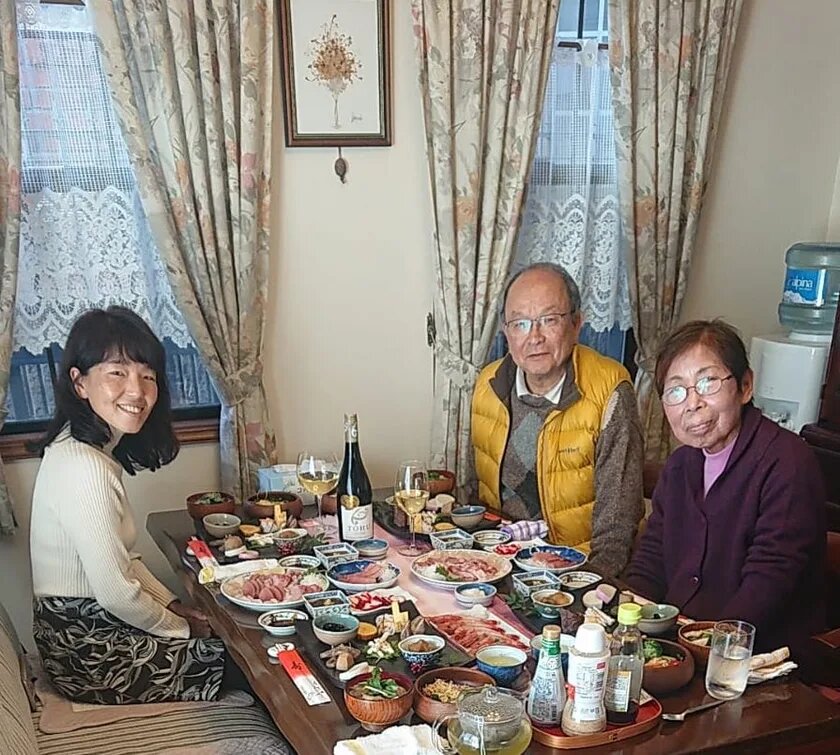
They married in 1977 in Christian rites at the Union Church in Makati, with the late professor Ajit Singh Rye, father of University of the Philippines (UP) political science Assistant Professor Ranjit Rye, and Dr. Josefa Saniel, as godparents. Both Rye and Saniel had served as deans of the Asian Center, and Saniel has been called the “grand dame of Japanology in the Philippines.”
Ohno, who speaks and understands basic conversational Filipino, has memorable experiences during Martial Law, including getting arrested for violating curfew and being made to cut grass in Quezon City.
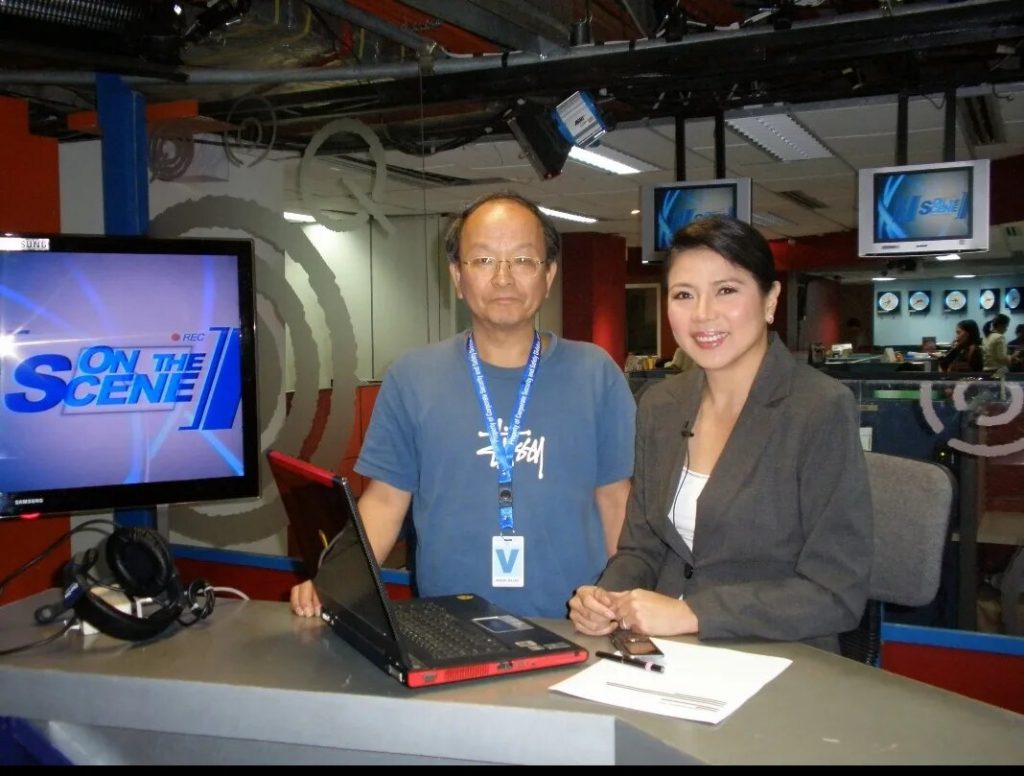
In 1972, with a recommendation from the Japanese embassy in Manila, he served as a guide and interpreter of a group sent by the Japanese government to look for two Japanese stragglers, including Lieutenant Hiroo Onoda, in Lubang Island, Mindoro. Although the team didn’t find the stragglers, Onoda would eventually surrender to then-president Ferdinand Marcos two years later. Ohno would also get to personally meet Onoda when the latter visited Kenya in 1987, when Ohno was posted in Nairobi as chief of Asahi Shimbun‘s Africa bureau.
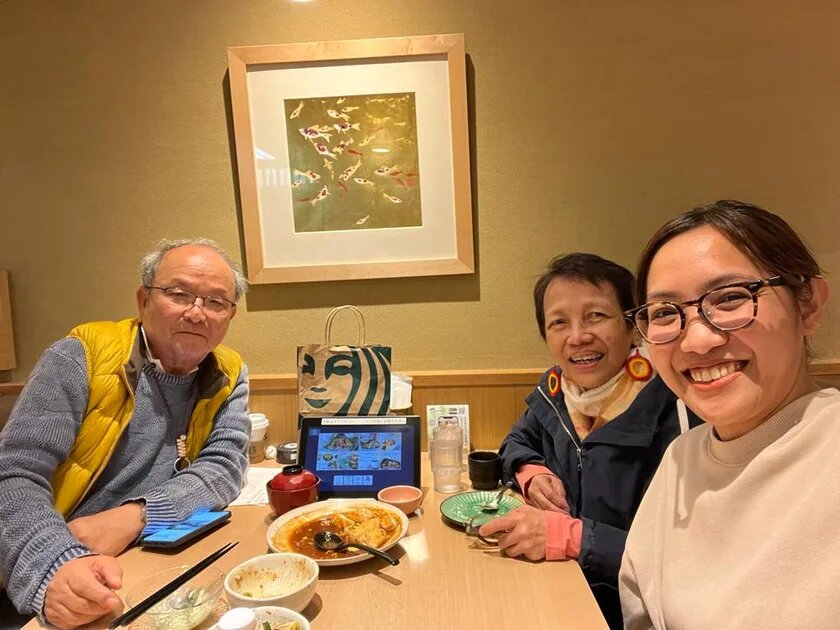
Ohno took up his post-graduate studies at UP from 1970 to 1977, getting a masters degree in Asian Studies from the state university’s Asian Center. He pursued a doctorate in political science, also at UP, but wasn’t able to complete it after he opted to join Asahi Shimbun as a staff writer. He would return to the Philippines 16 years later to head the Manila bureau of Asahi Shimbun in the last year of the Cory Aquino administration, and witnessed the first democratic elections post-1986 with the victory of Fidel V. Ramos in 1992.
As testament to his value as a Filipinologist, he has served for 35 years as president of the UP Alumuni Association–Japan Chapter (UPAA-J).
Ohno says he continues to write about the Philippines since he believes his second home is one of the most important neighbors of Japan, especially in terms of security and economy.
Personal circumnavigation
His latest book is the first that gives a glimpse into Ohno’s own circumnavigation as a citizen and as a journalist.
In the book’s prologue, Ohno recalls that when he was asked four years ago about the 500th anniversary of Magellan’s expedition in 2021, he “hurriedly began to look into it” and “at the same time, recalled my experiences and memories from my youth.”
He recounts his visit to the Cape of Good Hope, often mistakenly thought of as the southernmost tip of the African continent, a place in South Africa that was important to early discoverers.
“The tip of the Cape Peninsula is Cape Point… A lone lighthouse stands at the top of the hill. As you stare intently ahead, you can feel the waves and wind carrying the heartbeat of the earth. The area up to Cape Point has now been developed as a nature reserve, with walking trails and other facilities, and is a popular tourist attraction in post-apartheid South Africa,” he writes.
“The Cape of Good Hope is not the southernmost tip of the African continent. The southernmost point is Cape Agulhas, located at 20° 01′ east longitude and 34° 83′ south latitude. It is located about 150 kilometers southeast of the Cape of Good Hope, and when looking directly at the ocean, the marker that says ‘Atlantic Ocean’ on the right and ‘Indian Ocean’ on the left in English catches the eye.”
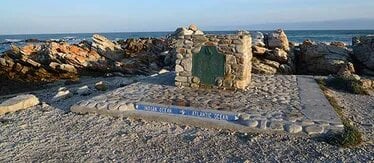
Ohno points out how this is connected to the voyages of the pioneers of globalization.
“In 1498, the Portuguese navigator Vasco da Gama sailed around here and arrived at Calicut on the west coast of India. From a European perspective, the crossing of Cape Agulhas was an epoch-making event that opened the door to the full-fledged Age of Discovery.”
As a journalist, Ohno was posted in Africa, the Philippines, and Australia, which gave him a unique perspective on life as well as the political economies in three continents. He was also a roving correspondent of Asahi Shimbun in the then-Union of Soviet Social Republics’ and Eastern Europe’s turbulent year in 1990.
He recalls going to India when he was still a student, and realizes belatedly the close sea link between Asia and Africa.
“Walking from Bombay (now Mumbai) Port to the city. On the way, as I was taking a break and sipping chai (black tea) at a stall, a young man passing by the shop approached me and asked, ‘Are you going to Africa?’ That was surprising. I was a little surprised to hear a place name that I had never expected, but when I looked at the map again, I understood. The sea in front of us is the Arabian Sea. If you close your eyes, you can imagine the Arabian Peninsula stretching out beyond you, leading to the vast continent of Africa. Well, I realized that Bombay is surprisingly close to Africa.
“Looking back, I have visited many places that are familiar to me from the Age of Exploration. However, at that time, even when visiting such places, apart from the Cape of Good Hope, I did not think about the Age of Discovery.”
Using historical accounts by Italian scholar Antonio Pigafetta and other first-hand materials translated into Japanese, Ohno recounts the encounter between Magellan and the natives that would eventually lead to his death in a battle led by Lapu-Lapu, chieftain of Mactan.
He says Magellan encountered friendly natives, “almost similar to the people of the Philippines today.”
“Magellan’s arrival in the Philippines was a prelude to the conquest, colonization, and Christianization of the islands. Lapu-Lapu, the chieftain of Mactan Island, killed Magellan and was later hailed as a ‘national hero’ of the Philippines, becoming a symbol of nationalism,” writes in the book’s epilogue. “Today, Mactan Island has a monument to Magellan and a statue of Lapu-Lapu in an area that has been developed as a park, and is one of the tourist attractions.”
He writes that while it took 1,082 days or roughly 3 years for Magellan and his successor, Elcano, to circumnavigate the globe in a westerly direction and return to a port in Spain, today it takes commercial airlines only around 50 hours (including layovers) to circumnavigate the globe.
Ohno wrote the book partly because of the need to present views from Asia and the developing world about world history, and urges students of history to read first-hand sources now available as e-books which heretofore were not readily available.
Referring to Magellan’s and other early explorers’ voyages, which came to be known worldwide as the “Age of Grand Navigation,” he writes that the idea that “European history is world history remains stubborn and deep-rooted.”
“Still, movements continue to be pushed back and pushed back, sometimes gently, sometimes violently, in various parts of the world to force a rethinking of history. I looked back on the past with a modest desire to join in this movement,” he says. – Rappler.com
Source: https://www.rappler.com/life-and-style/philippines-in-the-heart-japanese-book-on-ferdinand-magellan/
Pinoy inventor investigates abaca spacesuits and other nanotech innovations
Nanotechnology is a bustling field that opens the door to innovation across a wide variety of industries, from fashion and clothing to health and wellness. With this in mind, Dr. Gil Nonato Santos launched the iNano Research Facility in 2006.
iNano aims to provide nanotech-related services to academic institutions and industries, from manufacturing nanoparticles to nano-coating materials. Its diverse range of projects includes an abaca fabric coated with nanocomposites that can be used for spacesuits. Another project is focused on detecting lung diseases such as active tuberculosis, which affects 10 million people worldwide.
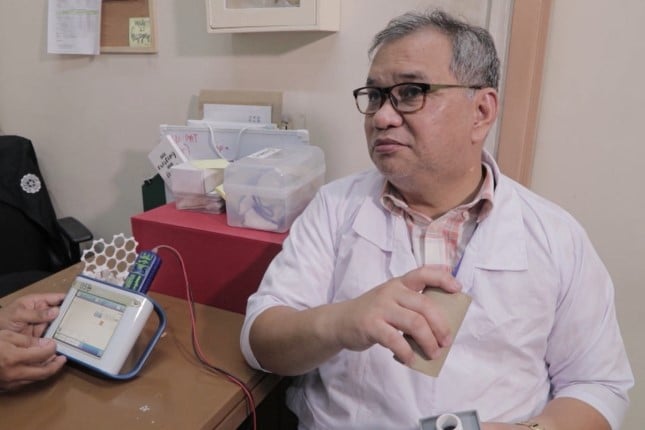
Dr. Santos received his doctorate from the University of the Philippines – Diliman National Institute of Physics (UPD-CS NIP). He is currently a full professor at De La Salle University – Laguna (DLSU-Laguna) and a visiting professor at Osaka University.
Based out of DLSU-Laguna, iNano has collaborations with institutions and companies across the globe, including a prestigious partnership with Integrated Microelectronics Inc. (IMI), a global company that manufactures electronics and semiconductor supplies, and support from USAID. iNano also has collaborations with the Lung Center of the Philippines and National Taiwan University.
More of iNano’s achievements and goals will be discussed by Dr. Santos at the next iStories session on Monday, November 20, at 4:00 PM. He will give his talk at the CS Admin Auditorium and will also be live streamed on Zoom. To join, you may register through this link: https://bit.ly/iStories6
iStories is a series of monthly innovation-themed talks, storytelling, and activities featuring local and international scientists. The initiative aims to ignite the creativity and inventiveness of young scientists not just from UPD-CS but also from other institutes inside and outside of UP.
For inquiries about iStories, please message a[email protected]
For interview requests and other media concerns, please contact [email protected]
UP Alumnus in the FIBA Hall of Fame
by Ken Russell M. Peñaflor
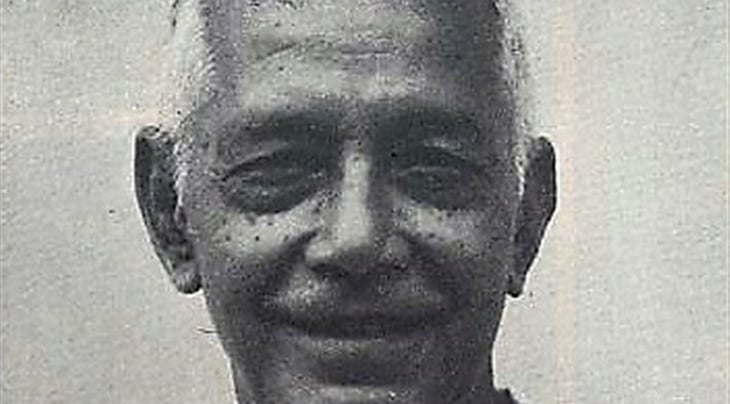
FIBA is the world governing body for basketball founded in 1932. The federation awards the Hall of Fame to great individuals who played key roles in shaping the history of this well-known sport. To belong to this distinguished list is an honor that Dionisio Calvo, a graduate of the University of the Philippines Los Baños (BS Agriculture 1926), has conferred upon the country and his alma mater.
Calvo, or “Chito” to his acquaintances, was enshrined as a member of the FIBA Hall of Fame in the Contributor category on March 1, 2007, and he belonged to the pioneering batch that received this prestigious award.
A man of various contributions to the basketball community, Chito proved that he is worthy of such a great title.
He was part of the University of the Philippines basketball team that won the championship title in the National Collegiate Athletic Association (NCAA) back in 1926.
Coach Chito was praised by the players he mentored. He was described as a very skilled tactician and a firm yet soft-spoken coach. He is considered one of the greatest, if not the best, pre-war basketball coaches, having commanded many teams.
He coached the Philippine Basketball National Team in two Olympic games; one in Berlin in 1936, where they ranked 5th, and in London in 1948. Coach Chito also led the Philippine team that clinched the championship at the 1951 Asian Games in New Delhi.
Chito ignited the love of basketball for a wider audience when he co-founded the Asian Basketball Confederation, which is currently known as FIBA Asia, giving more opportunities to players to be part of the international basketball community.
Chitos’s passion, determination, and perseverance in helping the Philippine team and improving basketball earned him a place as a record holder in FIBA. His legacy will never be forgotten and will serve as an inspiration to the current brood of basketball players such as his former team, the UP Fighting Maroons, in the University Athletic Association of the Philippines (UAAP) Season 86 that kicked off on September 30, 2023 (Saturday).
Dionisio “Chito” Calvo is indeed a distinguished alumnus and Atleta ng Bayan.
Sources: https://www.fiba.basketball/ and PH Sports Bureau Facebook
A UP golden jubilarian looks back
By Jingjing Villanueva- Romero

The most turbulent period of the University of the Philippines’ (UP) history was recorded during our era in the 1970s. The First Quarter Storm happened. The suspension of habeas corpus was declared and the announcement of martial law caught us all by surprise.
Yet the indomitable spirit of UP survived all these.
Yes, we attended teach-ins and discussion groups (DGs), held vigils, joined rallies and marches. The UP community stood their ground against the police and military takeover of the campus.
Many survived teargas attacks. There were those who learned to manufacture molotov cocktails in the basement of Kamia Residence Hall. And there were those who initiated boycotts and strikes.
While my friends and schoolmates went to all these mass actions, coming home trembling and hungry, I was restricted from participating because my father was with the military then.
Stories abound of friends and comrades who went home barefoot, out of breath from running away from the antiriot patrols. Among my fellow UP students, there were those who landed in jail and got beaten up by the police during demonstration dispersals.
The more patriotic and brave ones went underground. Sadly, many never came back. They were either missing in action, perished during bloody encounters or were “salvaged” beyond recognition.
We grieve for these young heroes and heroines to this day. We remember them. We honor them. We will never forget them.
‘Peyups’ way
Meanwhile, within the Diliman Republic, we followed our parents’ wishes and their sacrifice, so that we may pursue higher education, obtain our university degrees and serve a bigger purpose for the benefit of our country. Of course, apart from studying hard, we also lived our university years on campus and had fun in our free time.
Against the backdrop of martial law and curfews, campus life eventually had some semblance of normalcy. The campus administration and the various student organizations laid out activities beyond lessons that were taught in classrooms.

All these were designed for us to grow the ‘Peyups’ way. The UP Delta Lambda Sigma sisterhood, the political committee of the UP Residence Halls Association and UP Christian Youth Movement were some of the organizations in the university where I lived. These organizations nurtured me and contributed to my growing up as a young idealistic AB Broadcast Communication student.
We lived through our university years, developing a taste for a broad range of experiences among the dizzying choices of what the university offered us.
Where we lacked certain skills, specialty clubs were set up to help, with math problems and the like. One may end up not only mastering the subject but gaining a college sweetheart, as well!
For a taste of the finer things in life, we trooped to free concerts, movies and performances at the Abelardo Hall, UP Theater, College of Arts and Sciences Theater, or the Dulaang Kapiterya of the UP Institute of Mass Communication—with our significant others or friends and classmates.
Campus romances blossomed and thrived—and lasted/settled in domestic bliss through all these years. The ill-fated ones, while many have ended up at the altar, are now just bittersweet memories of one’s youth’s folly.
Academic freedom
The UP professors encouraged us to be voracious readers, to be deep thinkers, to keep our ears close to the ground, and to identify the community or organization we chose to serve.
All our mentors inculcated in us the love of country and national pride. It has been in our DNA to appreciate what it means and what it takes to be proudly Filipino.
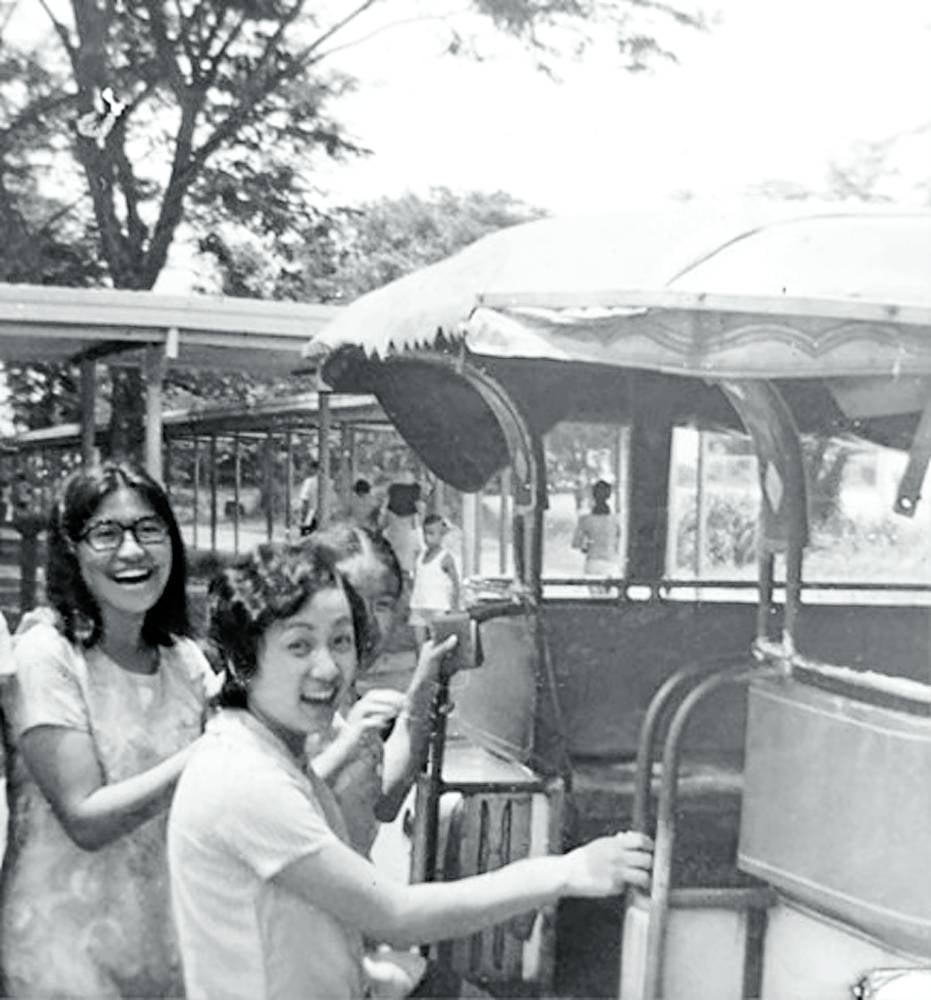
Free thinkers. Philosophers. Debaters. Activists. Leftists. Conservatives. Regionalists. Social Democrats. Greek-lettered society loyalists. Sophists. Fence-sitters. Free loaders.
Regardless of what badge we carried, academic freedom allowed us to sit in the classroom for traditional learning, or knock down those walls to learn from the masses.
We learned to be streetsmart. We learned to adapt in volatile, complex and sometimes ambiguous situations.
Through perseverance, many, if not all, allowed us to graduate and be the change agents, enablers and capability-builders of our country.
Born in the generation of baby boomers, flower people, and “make love not war” champions, we were in UP in the most interesting of times.
Natural-born leaders
Yet, many of us never really “left” the university despite holding prestigious and/or servant leadership roles in different sectors and industries.
Whether in the political arena, in government, in business and industry, in the academe, in arts/heritage/socio-cultural development, in NGOs, in mass media, we served as natural born leaders. Now as golden jubilarians, we continue to serve to this day.

The experiences we had in the 1970s had us gravitating back to the UP Diliman campus, not just through the years, but through five decades.
We have witnessed how the university has evolved, how activism has ebbed and flowed through the youngblood of the many Iskolar ng Bayan, and how the graduates feed our country’s and international workforce with a diverse group of talents.
We can at least speak of what to expect in the future as we have half a century of learnings to pass on. Many of us will continue to have a strong desire to serve, regardless of how far we go, how far our ambitions take us.
Welcomed by the bright yellow sunflowers along University Avenue on the approach to the Oblation, in front of Quezon Hall (Administration Building), we anticipate coming home.
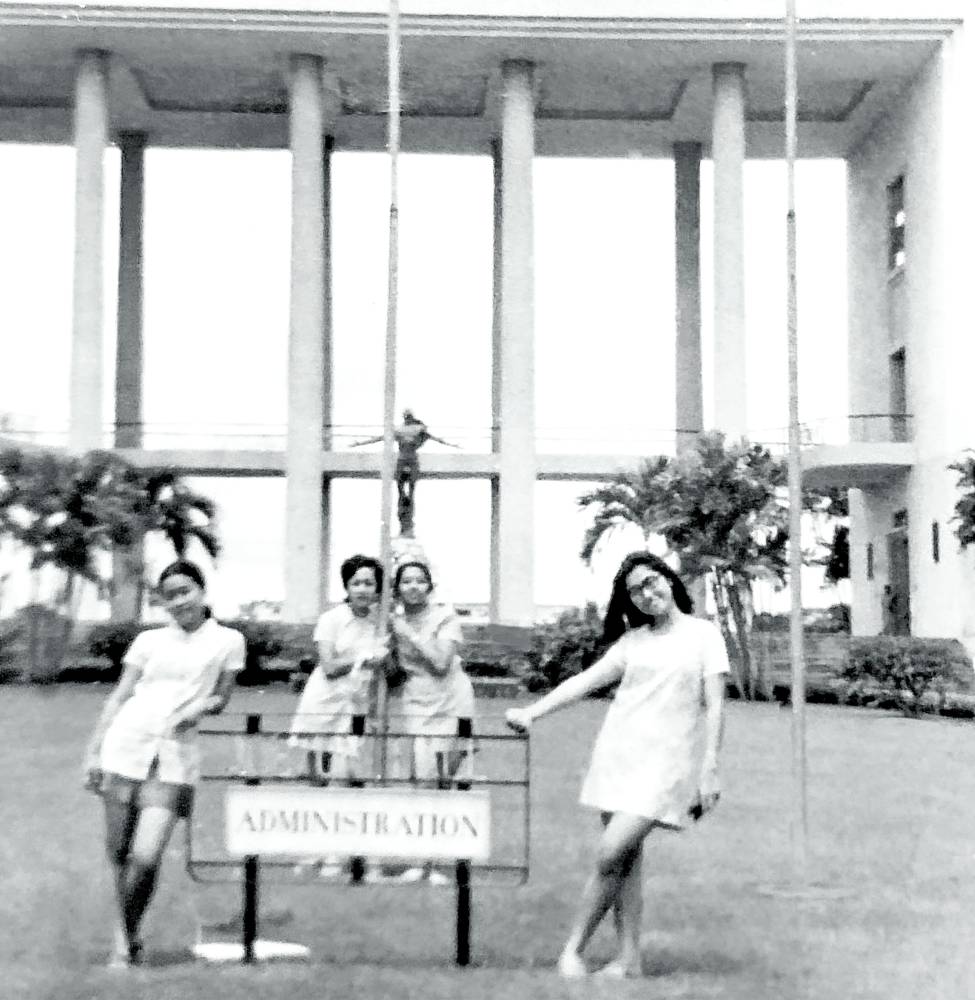
Count on us to be there in alumni gatherings and reunions to pay tribute to UP Naming Mahal, just like we did last Sunday, Aug. 20, where together with my batchmates, we joined the revelry for the diamond, golden, ruby and silver jubilarians.
As a proud golden jubilarian this year, I look forward to celebrating as a diamond jubilarian in 10 years’ time. And yes, together with my batchmates, we plan to present another performance that will surely bring the house down again!
The author, a member of UP Diliman AB Broadcast Communication Class of ‘73, is a retired publicist.
Source: https://lifestyle.inquirer.net/473281/a-up-golden-jubilarian-looks-back/
Doktor Para sa Bayan, Kasama ng Bayan
Written by UP Media and Public Relations Office
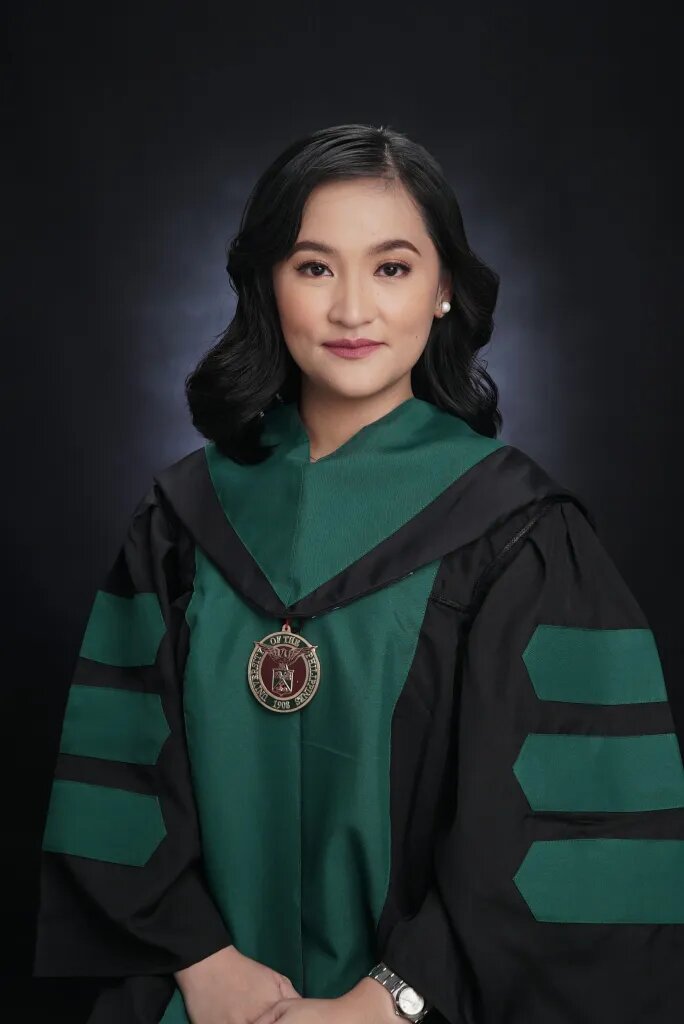
Jessica Franco Perez
Magna cum laude
Doctor of Medicine
UP College of Medicine
I am Jessica Franco Perez, 32 years old, from San Mateo, Rizal. I studied BS Nutrition in UP Los Baños and graduated magna cum laude in 2011. I passed the Nutritionist-Dietitian Licensure Examination and became a Registered Nutritionist-Dietitian that same year.
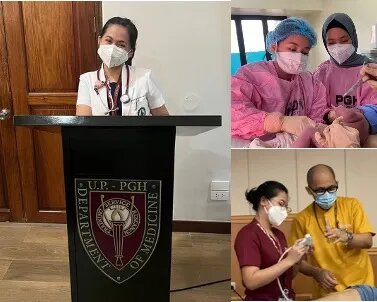
I worked at the Dietary Department of the UP-Philippine General Hospital (PGH) as a clinical dietitian. I was assigned at the Nutrition Clinic of the Department of Out-Patient Services where I provided nutrition assessment, individualized diet plans, and educational lectures to patients, doctors, and paramedical professionals. While working at PGH, I was also given opportunities to participate in different researches.
I am a co-investigator in a research project of Dr. A.G. Limpoco of the Department of Family and Community Medicine, titled “Development and Evaluation of Rapid Eating Assessment for Patients (REAP) Tool”. I also became part of several patient support groups, such as the Hansen’s Club, Lipat Kalinga, and Psoriasis Club.
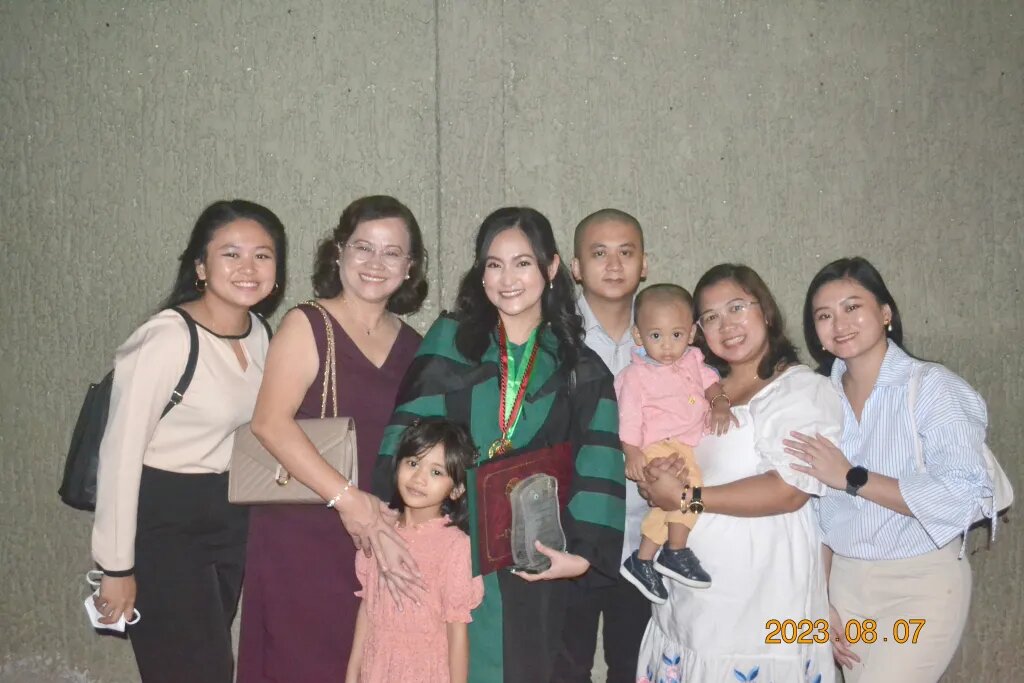
After six years of working at PGH, I then applied to and got accepted in the University of the Philippines College of Medicine at the age of 28. I became a member of the UP Pangkalusugang Samahan ng mga Mag-aaral (UP PAGSAMA) where I served under the SocCon Force, a committee that focuses on social engagements and community organizing activities. In the recently conducted 114th Commencement Exercise of the UP College of Medicine, I finally got my Doctor of Medicine degree, graduating magna cum laude and being one of the Top 5 Most Outstanding Graduates in Academics of our batch. I was also given recognition as one of the Top 3 Most Outstanding Interns of AY 2022-2023, being an outstanding intern in Medicine, Obstetrics & Gynecology, and Surgery.
Pursuing the dream
I have always dreamt of becoming a doctor since I was a child. However, being born in a middle-class family, this dream seemed impossible. Being the second child in a brood of four, I also wanted to help my parents financially, especially in sending my younger sisters to college. I initially gave up on my dream of becoming a doctor and focused on a career still close to medicine. I was happy serving as a clinical dietitian. It was an equally fulfilling profession, having the opportunity to help other people through proper diet and a healthy lifestyle. However, I knew that some part of me was wishing and hoping I could still be a doctor someday. Every morning after I conducted lectures in the OPD waiting areas, seeing the long queue of people patiently waiting to be seen by a doctor, I had always felt the desire to serve more, both as a dietitian AND as a doctor.
When my youngest sibling was already in her last year in college, I asked myself, “Posible pa bang maging doctor ako? Ipu-pursue ko pa rin ba ang pagme-Med kahit na matanda na ako?” These doubts had been running through my mind for quite a while. I also did not want to be a burden to my family, especially to my mother, given the additional years of studying instead of earning money. Thankfully, my family and friends were very supportive and encouraged me to still try. As the famous line goes, “It is better to try and fail than to never know and wonder what could have been if I tried.” And so, I juggled work, the National Medical Admission Test review, and preparations for applications to medical schools.
With a limited amount of savings and overwhelming uncertainty, I found the courage to resign from the job I had treasured for six years to start this new journey. I was very blessed to be accepted in the UP College of Medicine, where I could have a subsidized, high quality medical education. Without the subsidized tuition fees, the scholarship grants from the College, the Pe Gan Heng Foundation, and the UP Medical Alumni Society of America (UPMASA), as well as the unending support of my family and friends, I may not have been able to reach this point.
Student life and survival tips
The University of the Philippines has been my home since I was in college. I have always believed in its ideals and advocacies. With this, I am truly grateful to be admitted to the UP College of Medicine that lives up to its vision-mission of cultivating highly competent scholars whose lives are directed to learning and service to the underserved. Our medical curriculum is guided by the principles of a community- oriented education, research, and service. These ideals and principles guided me through all these years. During the COVID-19 pandemic, the College greatly helped the students as they were able to quickly adapt to the challenges and difficulties brought by the pandemic restrictions. They made sure that we were learning, while giving us ample consideration and understanding of the fact that we were also taking care of our family and doing chores at home, on top of our obligations as medical students.
Admittedly, I struggled with my studies, especially during my first year in medical school. With a gap of six years from the last time I had reviewed for an exam, I needed to relearn and adjust my study habits to fit the highly demanding medical education. I would sleep first after a long day of lectures and then wake up early in the morning to study. We all have different learning styles and thus, it is important to identify the study routine that works best for you. What worked for me may not work for other students. But if I were to share one study habit that greatly helped me survive medical school, it is the habit of planning and making a schedule. Planning ahead and identifying my target accomplishments for the day or the week made me more efficient and focused on my activities.
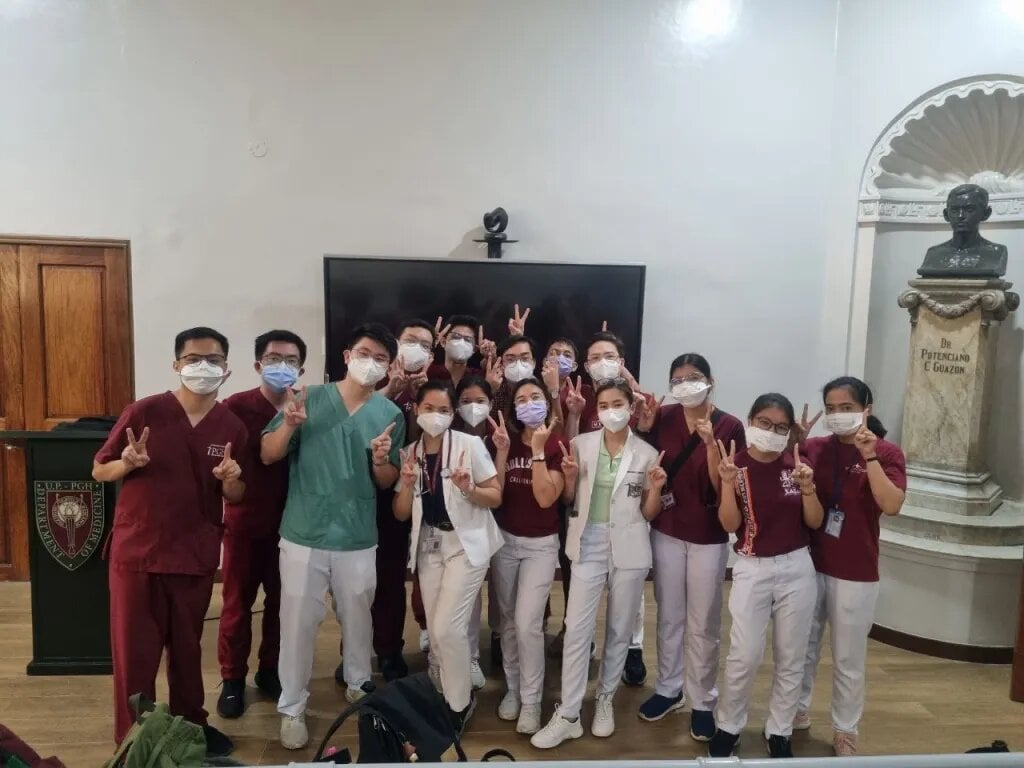
Another survival tip is to allow yourself to rest, as well as to allot quality time with family and friends, and on your hobbies. These will help you keep your sanity and will give you a boost to face yet another week of unending lectures, duties, and exams. My advice to make this possible would be to: 1) actively listen during lectures; 2) limit your time for browsing your social media accounts; and 3) prioritize sleep (you absorb and understand better what you are reading with a clear mind). I also maximized my study hours during weekdays (or on allotted study days) so that I could go home to Rizal and spend time with my family in the other days. All these helped me maintain balance between studies and life outside medical school.
Last but definitely one most important advice that I want to share is to have a deeper reason for what you do. Why are you studying medicine? Whenever I felt exhausted having to study for an exam even after a tiring hospital duty, I always went back to why I was here. I always reminded myself not to study just to pass the exams, but to study so that you will be a competent and excellent doctor for your future patients; study so that you can be part of a better healthcare system that you have always wanted. When we have a purpose that goes beyond us, things will still be difficult, but you will have the courage to overcome whatever obstacle you will face.
Plans after graduation
After graduating and passing the Physician Licensure Examination this October 2023, I plan to apply to the Internal Medicine residency program at the UP Philippine General Hospital. In the future, I also want to enter the academe as a professor and to participate in activities, programs, and advocacies directed to the service of marginalized communities and to the betterment of our healthcare system.
Looking back on my journey
Work hard, be patient, and do not give up on your dreams, even if it would take time realizing them. There will be detours and things will not always be in your favor. But be steadfast and trust that God’s plan is the best plan. Looking back on my journey, I now realize why God had to delay my admission to medical school. It was at the right time for me, when there was a CGMS (Cash Grant to Medical Students Enrolled in State Universities and Colleges) to largely subsidize our tuition fee knowing that I might not be able to finish my medical education due to financial constraints. I was taught by the most excellent professors who nurtured and inspired us to do our best as future physicians. I met my friends who have supported me and believed in me even in times when I myself doubted my own capabilities. They made my stay in UPCM worthwhile and much more bearable. Trust that the failures, rejections, frustrations, and “unanswered” prayers we encounter are part of the process to prepare us for the best things in life.
May we always uphold honor, integrity, and excellence whatever path we choose. May we all live a life of purpose, a life directed to the service of others. Kudos at Padayon, mga Doktor Para sa Bayan, Kasama ng Bayan!
———-
Written by Dr. Jessica Franco Perez for the UP Pagtatapos 2023 microsite. https://up.edu.ph/pagtatapos-2023/
Source: https://up.edu.ph/doktor-para-sa-bayan-kasama-ng-bayan/
Love life and don’t give up
Written by UP Media and Public Relations Office
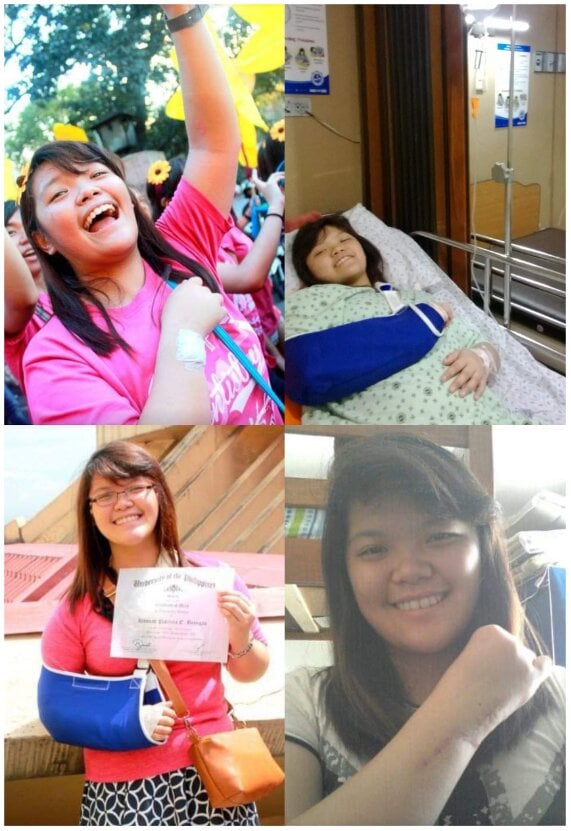
Hannah Patricia E. Bringas
Doctor of Dental Medicine
UP College of Dentistry
I am Hannah Patricia E. Bringas, a graduate of Doctor of Dental Medicine of the UP College of Dentistry. I was supposed to graduate from the course back in 2017 but several interventions contributed to my delay.
During the preparations for the Lantern Parade 2013, my dominant (right) hand was injured by a cutter blade in a freak accident. I was immediately rushed by my seniors and my friends to the PGH Emergency Department as I was already losing a lot of blood. The hospital staff performed several tests to check if there were any internal damages, especially on the nerves, and fortunately, it all seemed okay at the time. We all thought that it was just a simple skin laceration that needed to be sutured and closed shut. I was dismissed and I returned to my classes with a bandage on my hand the next day. The unfortunate accident happened in the second semester of my first year in Dentistry Proper, while I was enrolled in the Dentistry 131.1 (Operative Dentistry I) laboratory course. This course is only offered once a year and it is a prerequisite to several of the courses in the succeeding pre-clinical years. Even now, I could recall some laboratory sessions when I struggled to finish an exercise as my bandage kept falling off or my wound suddenly bled out of nowhere, but I continued to participate in classes and even attended the Lantern Parade itself.
During the Christmas break, I started to notice some difficulty in moving my right hand, but I thought that it was just part of the healing process, and it would return to normal after a few days or weeks.
However, one day, after our anatomy class, I consulted with my professor, an orthopedic surgeon, regarding my struggle in lifting my right ring and little fingers on their own and in using my hand to grip objects. I told him about my accident and asked for any input. That was when he informed me that my injury might have resulted in the transection of a few of the tendons in my right hand. He referred me to one of his colleagues for further assessment.
My surgeon knew that I was taking up Dentistry and he warned me that if I did not immediately undergo surgery to restore function and to prevent atrophy of my arm muscles, I might have to say goodbye to my dream of becoming a dentist. So, I went through the operation. I had to wear a cast for 6 weeks while the semester was still ongoing, and I was required to attend physical therapy sessions for several months after the cast was removed. As a result, I was unable to perform our laboratory exercises in Dent 131.1. I was advised by the then College Secretary, who was also the faculty coordinator of the said course, to file for dropping to avoid getting a failing grade. I was given the chance to still attend the lectures, while struggling to write with my left hand or using my tablet just to take down notes. I was even offered an oral examination because I was struggling to write legibly.
I already knew by then that I would not be able to graduate on time, that I would be delayed, that I could not join my friends and batchmates. It was painful, both physically and emotionally. My parents even asked me if I wanted to leave Dentistry when they saw and felt how defeated I was, and thought of how my injury would definitely affect my future. It had gotten to the point that I would take my injury as a test to see if I really did belong in Dentistry. However, I never thought of quitting. I saw this hurdle as an opportunity to strive harder. I was even able to perform well academically the next semester, and finished with a GWA of a “College Scholar”.
I re-enrolled in the same laboratory course the following academic year but had to endure pain and discomfort on my right hand while still undergoing physical therapy. Unfortunately, I was not able to complete the requirements in the course on time, as the laboratory procedures then required double or even triple my previous efforts, given my injury. I received a failing mark on the laboratory course and had to wait another year to re-enroll again.
I was already delayed for two years in the pre-clinical courses, but I made sure to never receive a failing grade on any theoretical subject. I practiced performing my laboratory requirements a lot, so as not to fail ever again. I also worked as a student assistant for a year during my pre-clinical years.
As a clinician, one cause of my delay in completing the requirements was due to repeated cases because of patients’ non-compliance even with the treatments already nearing completion. I, however, attended to all my patients, other clinical requirements, research, and community service in the best way I could, despite constant suffering through pain and discomfort in my right hand.
During the semesters within the pandemic, I lived alone near the College to attend to all the remaining requirements that I could accomplish via remote laboratory sessions, online case discussions, and limited face-to-face simulation exercises. However, a few of those remaining requirements still needed to be accomplished on live patients, so I still waited for the re-opening of the clinics last September. Once the clinics re-opened, despite a few problems encountered, I did not stop until I was able to complete my requirements and finally graduate.
While attending to my classes and requirements, I was a shift head for several semesters, and later on, became the head and the student council representative of the resident clinicians. I served a few years in the Dentistry Student Council, joined and performed with the members of GrooveDex, was one of the founding members of the UPCD Occlusal Harmonies, and participated in several dental missions and served the community through the Dental Health Brigade.
Even now as I practice for the board exam, my hand still hurts every now and then. The large scar is still there and reminds me every day of what I have lost, and of what I have also gained through all I have experienced. They taught me not to give up. They taught me to appreciate every second. They taught me to love life, and that there is always light at the end of a very dark tunnel. These lessons are what I will carry with me as I face the next chapter of my life.
———-
Written by Dr. Hannah Patricia E. Bringas for the UP Pagtatapos 2023 microsite. https://up.edu.ph/pagtatapos-2023/
Finding your own groove
Written by UP Media and Public Relations Office
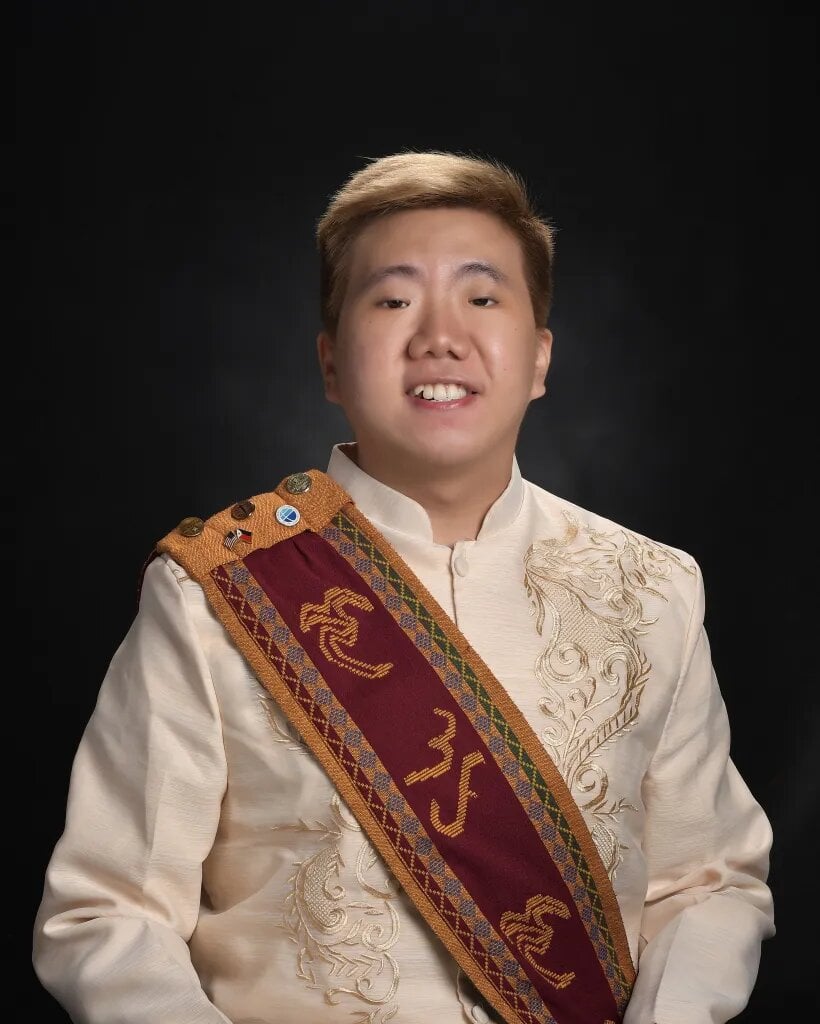
Virgilio Roi C. Adaptar
Cum laude
BS Food Technology
College of Science and Mathematics, University of the Philippines Mindanao
My name is Virgilio Roi C. Adaptar, 24 years old, born and raised in Davao City, and people call me VR. I am a graduate of the BS Food Technology program at the College of Science and Mathematics, University of the Philippines Mindanao.
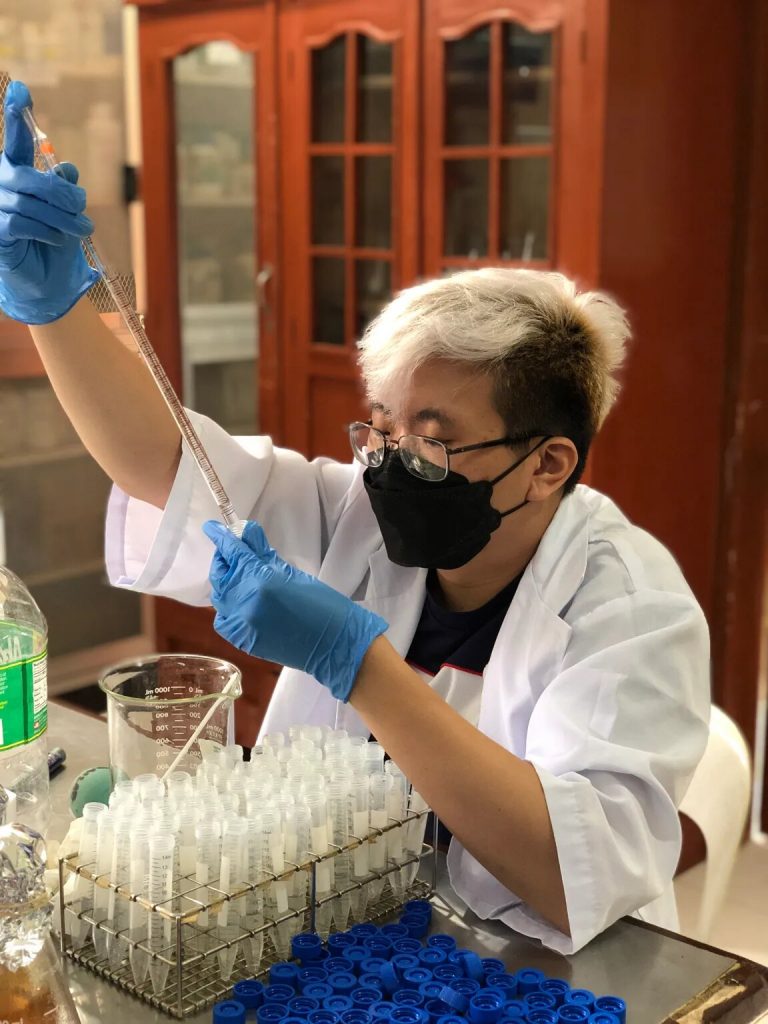
My research interests include probiotics, valorization of local produces and agricultural by-products, and nutrition, all anchored on the principles of inclusivity and sustainability.
I used to compete as an Adjudicator in the UP Mindanao Debate Society, and was able to represent the University in various debating competitions and tournaments around the country.
Also, together with my fellow DOST Scholars, I am one of the founding members of the UP Mindanao League of DOST Scholars, the first and the official association of DOST Scholars in the University. I eventually served as the Founding President of the organization, and held various leadership positions throughout my residency.
I am also an active member of the U.S. Government Alumni Association -Davao, the regional chapter of international exchange alumni of U.S. Government-funded exchange and internationalization programs.
I attended McNeese State University during the Fall 2021 semester under the Global Undergraduate Exchange Program (Global UGrad) through the U.S. Department of State, World Learning, and Fulbright Philippines. Upon coming home, I then became an active member of the Global UGrad Scholars of the Philippines Alumni Association.
Overcoming financial difficulties
Growing up, I was well aware of my family’s financial struggles. Scholarships, subsidies, side hustles — these sustained my financial needs throughout my studies. I started taking commissions and part-time jobs way back in high school, because even though I had a scholarship, it did not fully cover all fees and I had to find ways and means for my daily allowance and other expenses. I also saw how difficult it was for my mother to make a living and did not want to keep asking from her anymore.
In college, I was awarded an undergraduate scholarship from the Science Education Institute of DOST, which really helped ease the financial burden. Despite the generous amount I received every semester from DOST, I still opted to do side hustles as the stipend I received was still not enough for me as a self-supporting student in this economic climate. I used to do events hosting, ghostwriting for blogs and other online platforms, arts and crafts commissions, tutorials for elementary and high school students, and eventually I became a call center agent, and later on transitioned into being a freelance virtual assistant. I should say, being a working student was difficult and would not want to romanticize it. If I only had the option and the privilege to be a full-time student, I would not want to work while studying just to make ends meet.
I am not that typical “straight uno” student who would often be celebrated for academic prowess. I would rather refer to myself as a student who had the capacity to endure. This led me to being selected as one of the four Filipino students, and the only Mindanaoan, for the prestigious Global Undergraduate Exchange Program for the Fall 2021 batch. Furthermore, grit enabled me to pursue my undergraduate thesis on non-dairy probiotics which also utilized local agricultural by-products. My study won 1st Place in the Oral Research Presentation (Undergraduate Category) of the Philippine Society for Microbiology Mindanao 27th Annual Convention and Scientific Meeting and was nominated as finalist for Best Thesis (Basic and Applied Research Category) in the Department of Food Science and Chemistry of our Ccollege. Currently, I am working towards getting it published in a scientific journal. Finally, I was able to shift my Sablay from right to left when I graduated cum laude last July.
Hardships before becoming an Iskolar ng Bayan
When I was 12, someone power-tripped me and said “You do not deserve to be an honor student,” and slammed their fists on the table. Some people even expected the 12-year -old me to just easily move on from that experience, and that I was just overreacting. Of course, not everyone believes in mental health and trauma. And yes, being an honor student in elementary is not really that big of a deal for a lot of people, but the young and naïve 12-year -old me felt invalidated.
When I was 14, my family faced a huge financial problem and finishing high school was almost taken away from me. I remember seeing my mom, swallowing her pride to ask for help from others whenever I needed something for school, yet she would often be rejected or humiliated. I could even remember some relatives asking me to just drop out of school since class grades “cannot be eaten” and that I should just start working instead to be more useful to the family.
At present, my anxiety is still triggered by all those words said. I still get nightmares once in a while and I still wonder about what goes on in the minds of those people, if they think about what they’ve done, what stories they’ve told their friends, family, and other people. I haven’t exactly figured out how to let the trauma and anxiety go away. Most of the time, I just distract myself.
College seemed to be a great opportunity to pursue more things “to distract myself” and grow up from what happened in the past. And in a place like UP where freedom is highly valued, I felt more free to blaze my own trail and make the most out of my time as an eager young adult.
Org life in UP
With the freedom that we all enjoy in UP, organizations served as a meaningful avenue to grow and develop beyond classrooms and laboratories.
Through the UP Mindanao Debate Society, I was able to enjoy the art of discourse, meet new people in tournaments, and find a safe space among my co-residents. Debating taught me innovative thinking and problem-solving., Aand much more than these, it made me realize the importance of being aware of the issues that we face in society, and that talking about these issues sheds light on the real problems and lived experiences of the various sectors of society, and that the more we talk about these, the more attention we can bring to them to help shake up the status quo.
Moreover, I never initially envisioned that I’ll be a part of a bunch of people behind establishing a new organization. We were freshies back then and we often asked the same question again and again if UP Mindanao already has its own organization for DOST Scholars. Until we ourselves answered our own question. We then established the UP Mindanao League of DOST Scholars (UPMin LeaDS). Not long after, I found myself taking the lead as its founding president. From dancing “batis” during our first Patriot Scholars Formation Program, being duly recognized as a student organization on campus, launching our first project and initiative, and organizing the first Congress we attended as an org; to taking new leadership roles in the organization (as if I was playing “Trip to Jerusalem” and being surprised as to where I would end up next), being a rallying point for academic and moral support for our fellow scholars and aspiring ones, helping revive and mobilize the regional organization of DOST Scholars in Davao, struggling through the chaotic times during the pandemic (and getting a lot of anxious, worried, and confused messages from fellow scholars, all uncertain of what might happen next), and everything in between, I was grateful for the opportunity to initiate and lead. I know that the org is still far from being what it is envisioned to be and that I did have my lapses and shortcomings and a lot of unfinished business and what ifs as a leader, but I am grateful for the trust and confidence shown by the people around me and I am excited to see what’s next for UPMin LeaDS.
Being a working student
My org life in UP sounded fun and stress-free, right? Here’s what was happening beyond the org meetings, projects, and events.
I was not born with a silver spoon, and of course, society is unfair to those who are not that privileged.
At some point, I felt that I was easily exploited by others who saw my background as an opportunity to manipulate and make it work to their advantage, but I did not have much time to think about it back then. I was too preoccupied with the need to put in extra work, to make the most out of meager resources, to always be on the lookout for the next available “raket”, to think of ways on how I could make it from one paycheck to another, from one month’s stipend to the next, to juggle one job and another, switching lanyards or IDs from one shift at work to try to make it on time to the next class in school. I had to look for ways to augment my income while trying to meet deadlines and studying for exams because no one else would.
Hard work is often set as the ultimate factor behind success and our society loves seeing or hearing “rags-to-riches” stories to the point where poverty is romanticized and accepted as a norm. In an ideal world, hard work may be the sole and primary factor for success but we are far from being in that ideal world.
As a Food Technology major, I struggled to go through a typical day in college. It was even more magnified when I was already doing my thesis with very minimal funding. I hope that someday, access and support for quality scientific education will be available for all those who aspire to be researchers, engineers, doctors, educators, scientists, and mathematicians;, and that we may move past being a society that oppresses, deprives, and excludes.
If hard work or “sipag” was the only factor to achieve success, other working students like me should have already been assured of a more comfortable life straight out of college, right? Farmers and laborers would probably be as glorified and celebrated as CEOs and world leaders. However, we are definitely not in an ideal world where hard work is the sole factor behind success.
Plot twist
No, this is not going to be a college love story.
Instead, we go back to one random morning during my sophomore year. It was around 8 AM and I just got out of my graveyard shift at work. My first class for the day, organic chemistry, was at 8:30 and with the one- to two-hour commute from the office to the campus, it would always be impossible for me to make it in time for class.
Towards the middle of the semester, I realized that by being a student by day and working the night shift as a call center agent, I would most likely fail in the class. I thought to myself that if I eventually get a 5.0 in my transcript, I should have some redeeming factor to make up for the anticipated failing grade.
The universe was telling me to let go of my graveyard shift job and just be a full-time student, which was not really sitting well with me given my situation.
I was ready to get my first 5.0 in UP and started to look for options on what I could do to compensate for that in my transcript.
Attend workshops? More debating? Start doing internships (and a lot of them)? Join fellowships? Join another org? Go on an exchange program?
Coincidentally, another professor of mine invited us to an exchange programs roadshow hosted by Fulbright Philippines and I learned about the Global Undergraduate Exchange Program (Global UGrad).
The Global UGrad program is a semester-long exchange program in the United States participated in by over 60 countries that “brings future leaders to the United States to experience U.S. higher education, gain critical professional skills, and explore new cultures and values”.
Asst. Prof. Kriza Faye Calumba, who later on became my thesis adviser, was very instrumental in this endeavor as she encouraged me to apply and even agreed to write a recommendation letter supporting my application.
The things that happened next went in my favor: I got a 4.0 instead of a 5.0 and passed my removal examinations for organic chemistry, I let go of my night shift job and found another job with more flexible working hours, and I got into Global UGrad.
However, the pandemic happened and things went to a pause for a while. I was supposed to leave for the U.S. by August 2020 but the situation was still far from being under control. My program was eventually postponed to Fall 2021.
I will never forget August 12, 2021, –the day I traveled to the United States. Growing up in a family where studying in college seems like a shot to the moon, studying abroad was just as far-fetched.
McNeese State University in Lake Charles, Louisiana became my home for the rest of the semester. I was able to explore concepts in nutrition and food production from an international perspective and also studied microbiology from a clinical perspective and learned about American History with the theme “What is the role of the United States — around the world and at home?”
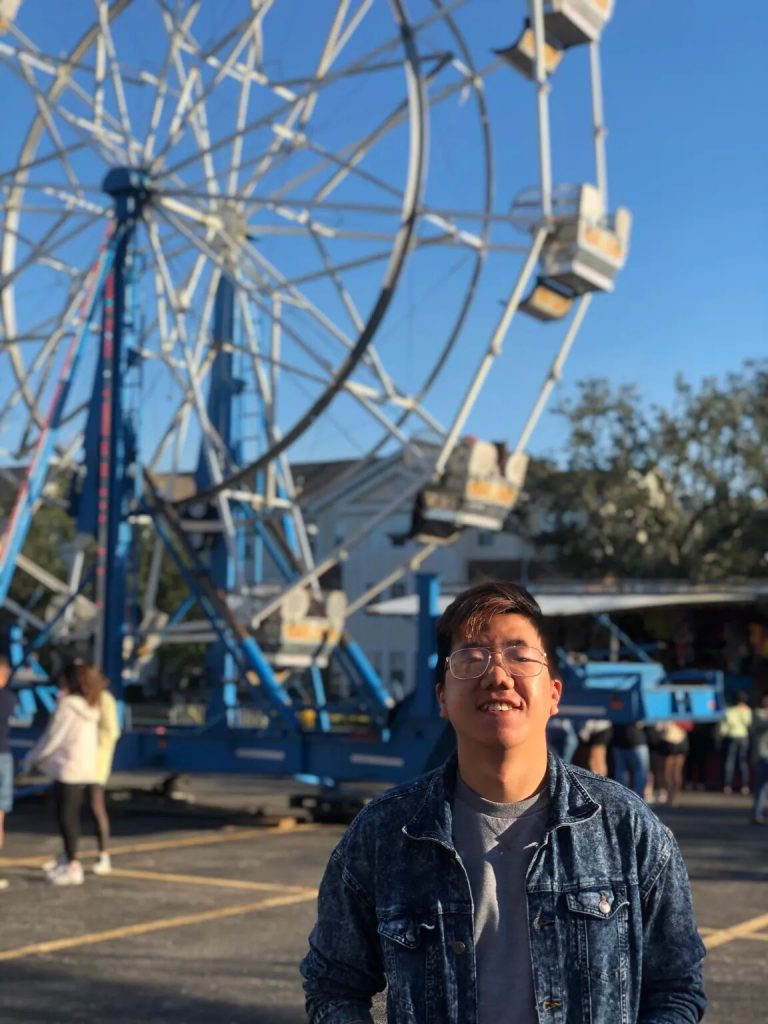
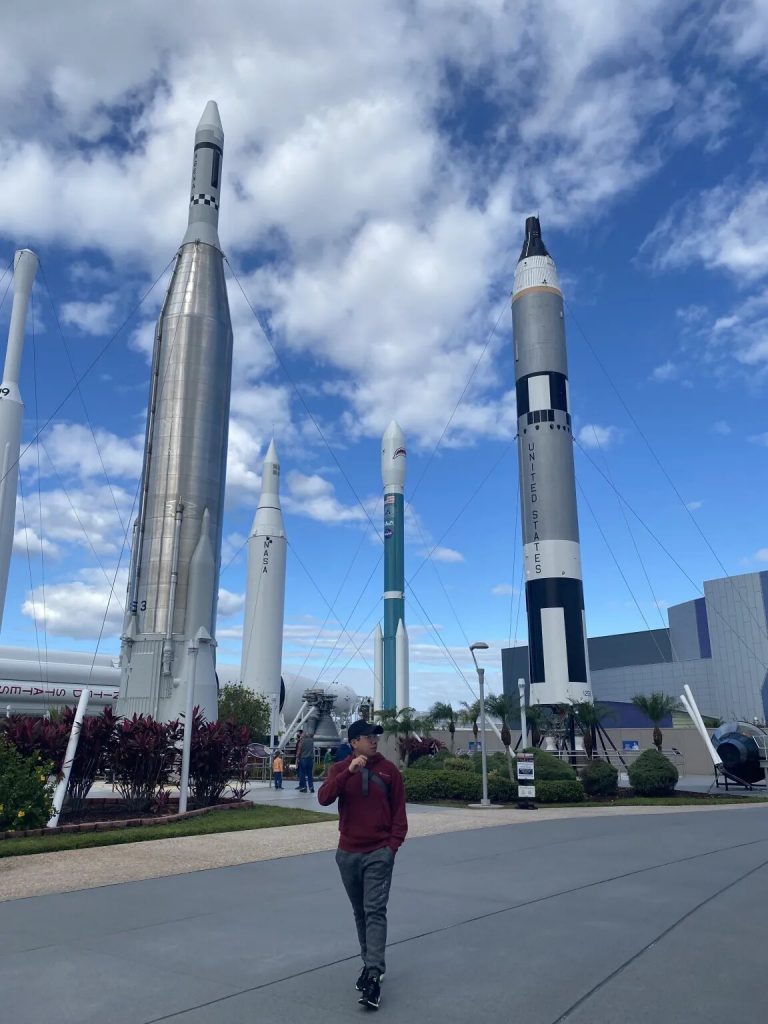
Throughout my stay in the United States, I was also able to watch my first football game in Lousiana State University in Baton Rouge, Louisiana, enjoy the art scene and authentic Texas brisket and barbecue in Austin, Texas, explore some caverns in San Antonio, Texas, visit the historic French Quarter in New Orleans, Louisiana, and celebrate Thanksgiving in Jacksonville, Florida. I also fulfilled a childhood dream of stepping foot inside a space center when I visited the NASA Kennedy Space Center in Cape Canaveral, Florida.
Furthermore, the community engagement component of Global UGrad also allowed me to connect with the community in Lake Charles, Louisiana, and get to know the locals, many of whom were still recovering from two devastating hurricanes that struck the area at the height of the COVID-19 pandemic.
Being an exchange student means that you are also serving as a cultural ambassador of your country, and it was truly an honor to raise the flag of the Philippines. From introducing adobo to my American roommates, showing them the way we cook rice with the trusted finger method for measuring the right amount of water, sharing some OPM songs, teaching some Tagalog and Bisaya words to my American classmates, to assisting a research student in her study on plant-based yogurt, sharing a bit of our shared history between the Philippines and the U.S. in class, and connecting with Filipino-Americans in the area, I believe that I was able to make the most out of my stay in the United States.
Upon coming back home, I continued working on my undergraduate thesis, got involved again with more projects through my organizations, and actively helped in promoting exchange and internationalization opportunities for other Filipino students to help them widen their perspectives and further capacitate them in their chosen fields, and in return, apply what they learned in their respective communities.
Yes, I flew out during the Delta surge and went back home to the Philippines in the middle of the Omicron surge.
Study habits
I can’t say that I really have good study habits. I adjust depending on my mood and physical well-being (e.g., I postpone studying or doing academic work if I feel sick). I don’t force myself to study or do academic work if I still don’t feel like it because I will end up with half-baked or mediocre outputs. One thing that I think worked for me though, is reading or writing at night. I think the peaceful atmosphere between 10 in the evening until around dawn helped me focus, especially during the lockdowns during the pandemic where everyone was at home and awake during the day. Nevertheless, I think it’s a matter of “finding your own groove” and seeing what truly works for you when it comes to studying or doing academic work and requirements, because what worked for me might not be that effective for you. If all else fails, get some sleep.
I should also emphasize that the guidance and mentorship I received from my professors in UP Mindanao, especially the Department of Food Science and Chemistry, made this academic journey seem like I was standing on the shoulders of giants. The pandemic made the semesters too uncertain yet my professors remained nurturing and understanding, especially my adviser, Asst. Prof. Calumba, who truly lived up to her role as an adviser holistically and continued to believe in me at a time when self-doubt almost consumed me.
More tips for students
Lessons I picked up while performing my experiments for my thesis:
-
- I encountered different strains of lactic acid bacteria: some are fast-growers, some grow at just the right amount of time, while others take a bit longer. Like these different bacterial strains, we all have our own different pace in life.
- I did a lot of trial and error for my experiments. I made some mistakes. I made some adjustments. It’s okay to make mistakes in college. We are human, after all. It’s okay to try again. Did it take you a 2nd, 3rd, or nth try before succeeding? Again, it’s okay and you did great! I don’t think there’s such a thing as “lesser success” just because it took you longer.
- Sometimes, I had to stay until 10, 11, or midnight in the lab while waiting for tests to finish and during the wait times in between, I would read or watch videos or do some side tasks (that may or may not have been directly related to my thesis). Yes, college will be exhausting but academics is not the end of it all. Find an alternative outlet or channel which you could also invest your time and energy in.
- I always went back to the objectives of my study throughout my thesis-related works when I felt confused. Always go back to your WHYs, your purpose. This may not exactly be motivating but it can help you recalibrate, redirect, and realign your path in pursuit of your goals.
Plans after graduation
I intend to pursue a research and development track and work in the food industry for the next couple of years after graduation. Meanwhile, I also plan to volunteer or contribute to non-profit and civic orgs on the side because I enjoy doing those things as well. Furthermore, I also want to pursue postgraduate studies in food science and technology abroad in the near future.
The true meaning of the sablay
May we be disturbed by the stereotypical status of UP students, graduates, and alumni as “the cream of the crop”, the “upper echelon”, the “best of the best”. This privilege exists because there are others in the margins who are oppressed, deprived, and excluded.
May we be reminded that for every single sablay being shifted to the left, countless others still suffer and struggle with the very systems that they trusted yet failed them. May we also be reminded that for every single sablay being shifted to the left, there remains a lot of space that must be taken up to eliminate social injustice systematically.
UP, para kanino nga ba tayo?
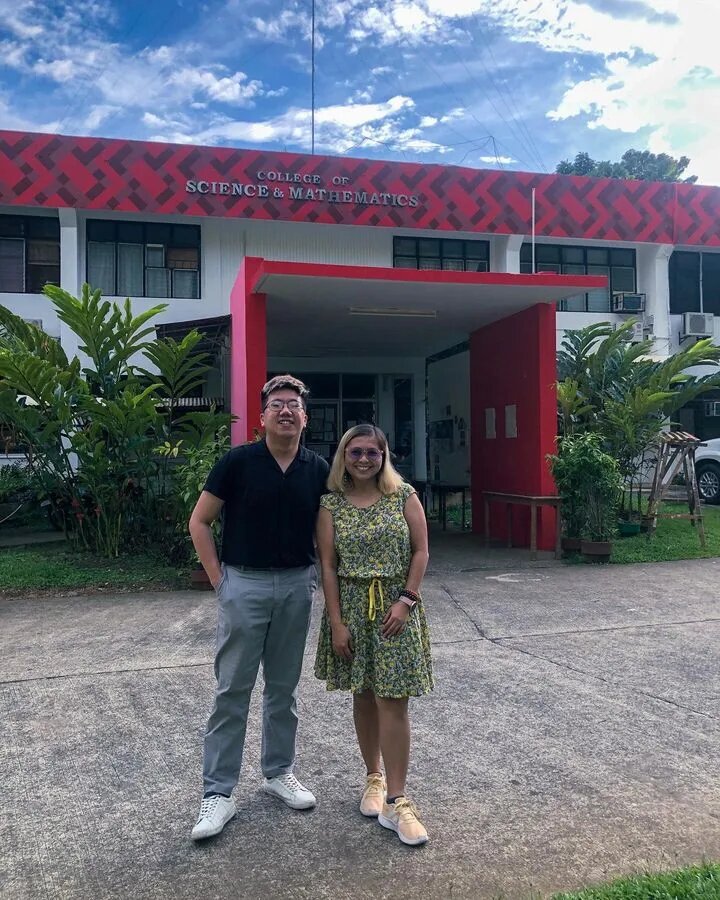
Calumba, at the College of Science and Mathematics. Photo courtesy of VR C. Adaptar.
————
Written by Virgilio Roi C. Adaptar for the UP Pagtatapos 2023 microsite. https://up.edu.ph/pagtatapos-2023/
Source: https://up.edu.ph/finding-your-own-groove/
Padayon
Written by UP Media and Public Relations Office
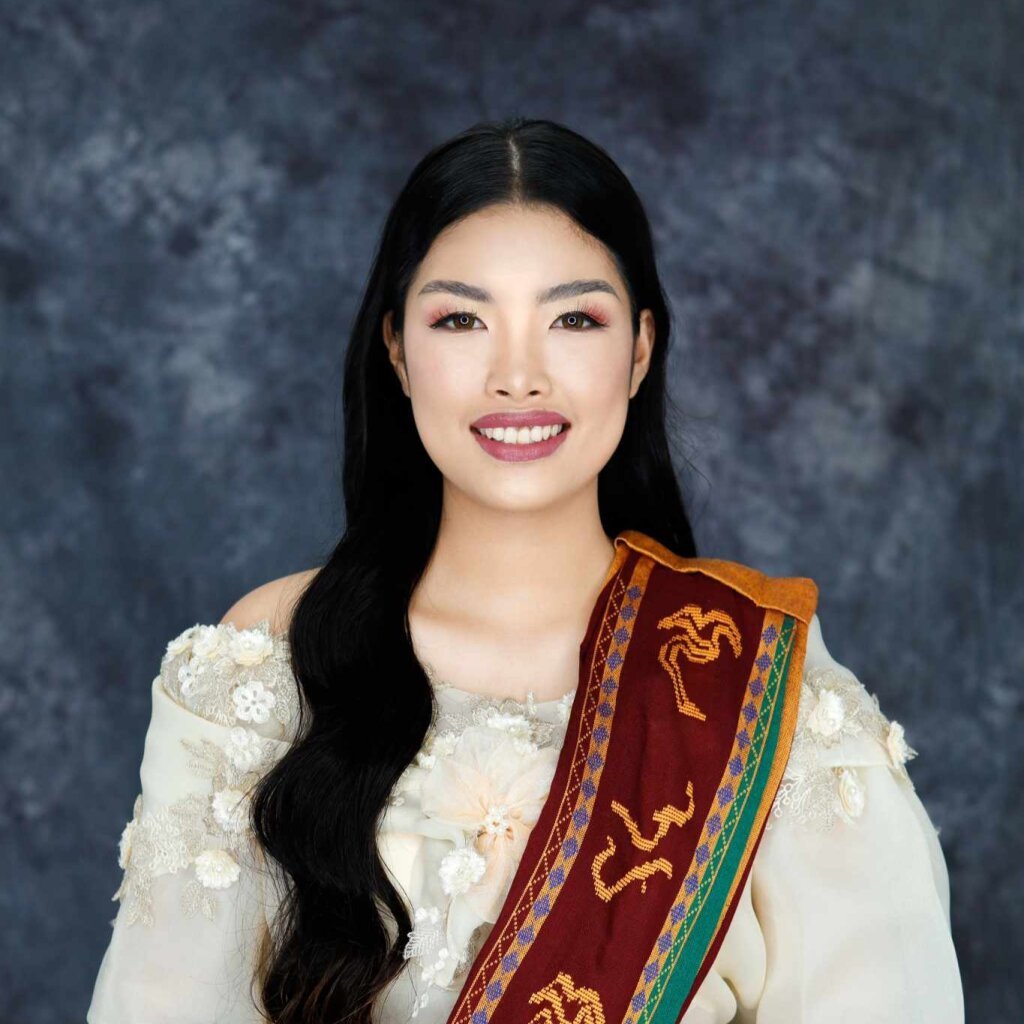
Nixie E. Serna
Magna cum laude
BA in English (Creative Writing)
College of Humanities and Social Sciences
University of the Philippines Mindanao
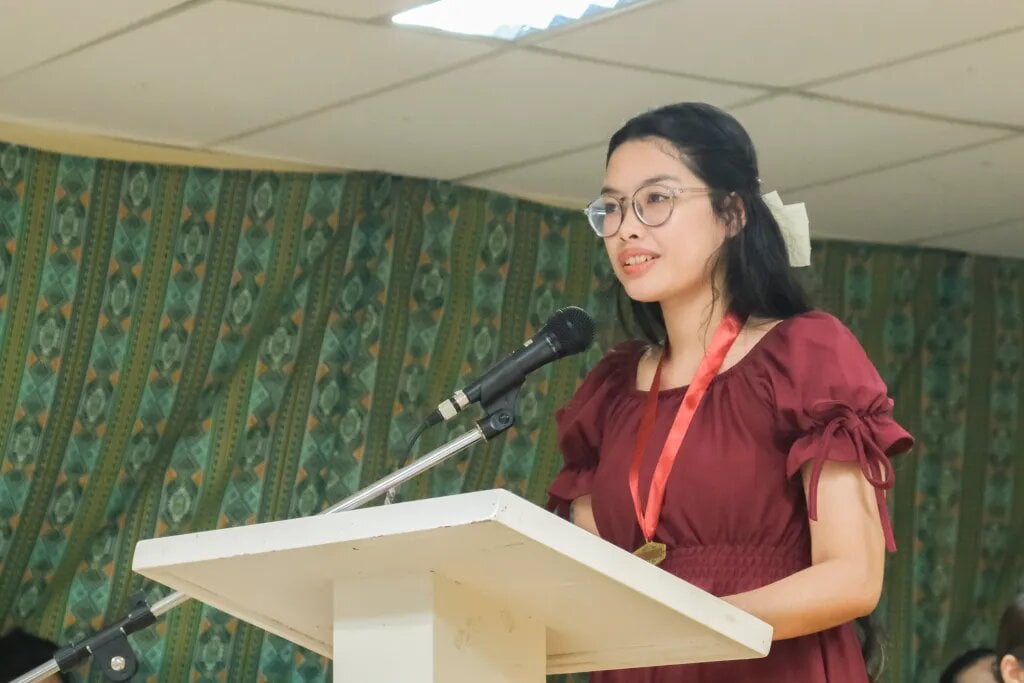
I am Nixie E. Serna, 23 years old, from Surigao City. I studied BA in English (Creative Writing) at the University of the Philippines Mindanao and graduated Magna cum laude. As a creative writer, it is given that you have to be interested in reading and, of course, writing. At a young age, I had always been drawn to books. I usually spent my free time browsing in the library from the time I was in grade school. I would also spend the little money I saved from my ten-peso allowance to buy those booklets sold by visitors in school back then. Eventually, reading compelled me to write because I also wanted to create my own stories.
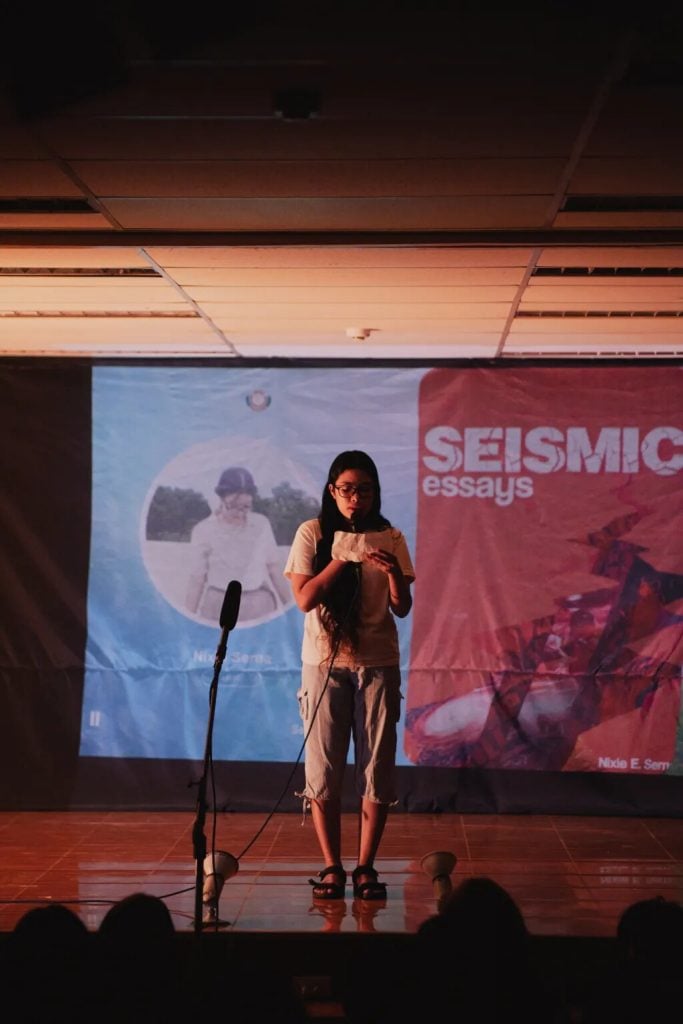
My undergraduate thesis was an essay collection titled, Seismic, for which I received the Thesis with Distinction award. The essay collection was on disasters, particularly the 2017 earthquake in Surigao, the 2019 earthquake swarm in Davao, super typhoon Odette in 2021, the effects of the pandemic, and other personal disasters I have experienced. Some of my works have also been published in the Philippine Daily Inquirer Youngblood column, Life UPdates of Likhaan: UP Institute of Creative Writing, Dagmay.online, and Mindanews.
Aside from reading and writing, I also draw in both traditional and digital media. I run an art account on social media; and you can find me on Instagram and Twitter by the username @nikushiisan. Most of my drawings are fanarts of media I like such as anime, K-pop, movies, or TV shows. I rarely upload drawings nowadays because of my busy schedule, but I try my best to draw every now and then to keep my skills sharp. One of my goals is to one day improve my art so that I can also illustrate my own stories and characters or produce illustrations for Filipino writers.
In addition to reading, writing, and drawing, one of the hobbies that take my mind off the stress of academics and other matters is listening to K-pop songs, particularly the group EXO. I am an EXO stan or an EXO-L which is the official name of their fandom. I follow this K-pop group because of their diverse and great discography, artistry, and dedication to their fans. I also always keep in mind this quote by Kai, one of the members of EXO, about studying to motivate myself, “If you’re not good at studying, don’t even think about liking me. . . . Focus more on your studies than us and meet us again proudly in the future.” I do hope I can meet them at their concert in the future.
Overcoming financial constraints
My parents primarily supported me in my studies. However, there are four of us siblings in the family and their minimum wage is not enough to send us to school. As the eldest child, I had to find ways to fund my education. The Free Tertiary Education Law greatly helped me in achieving a higher education. Otherwise, it would have been difficult for me to enroll in college, especially in UP, considering that UP Mindanao is very far away from my hometown.
Since my first year, I applied to the Student Learning Assistance System of UP so that I could receive a stipend to help me with my studies. Through the stipend I saved, I was able to buy a laptop and pay for the internet bill, both of which were necessary not only during face-to-face classes but especially during online classes due to the pandemic. During my second year, I applied for a scholarship sponsored by the UP Mindanao Foundation Inc. They were meticulous in accepting their scholars by checking their academic standing and economic background, but thankfully, I was accepted. Every semester, I would renew my scholarship by submitting my grades. Even during that time when we were devastated by super typhoon Odette in 2021, I persevered in completing my requirements so that I could renew my scholarship. I am immensely grateful to UPMFI and the taxpayers who helped me finish my education. I would surely use what I have learned in the University by giving back to the people.
Dealing with disasters
Aside from financial constraints, my college life was nothing short of disasters. Like my fellow batchmates, I had to endure the challenges brought by the pandemic in 2020, including the shift to online classes which took a toll on our mental health because of isolation. My parents were laid off from work and we had to rely on the cash assistance and ayuda from the government to sustain us. Around the height of the pandemic on September 2020, our house was also demolished since the lot it was standing on was sold to a new owner. We are temporarily living right now in a house that was intended for the stay-in employee of my mother’s employers. To sum up, we currently have no fixed abode because we do not have our own house.
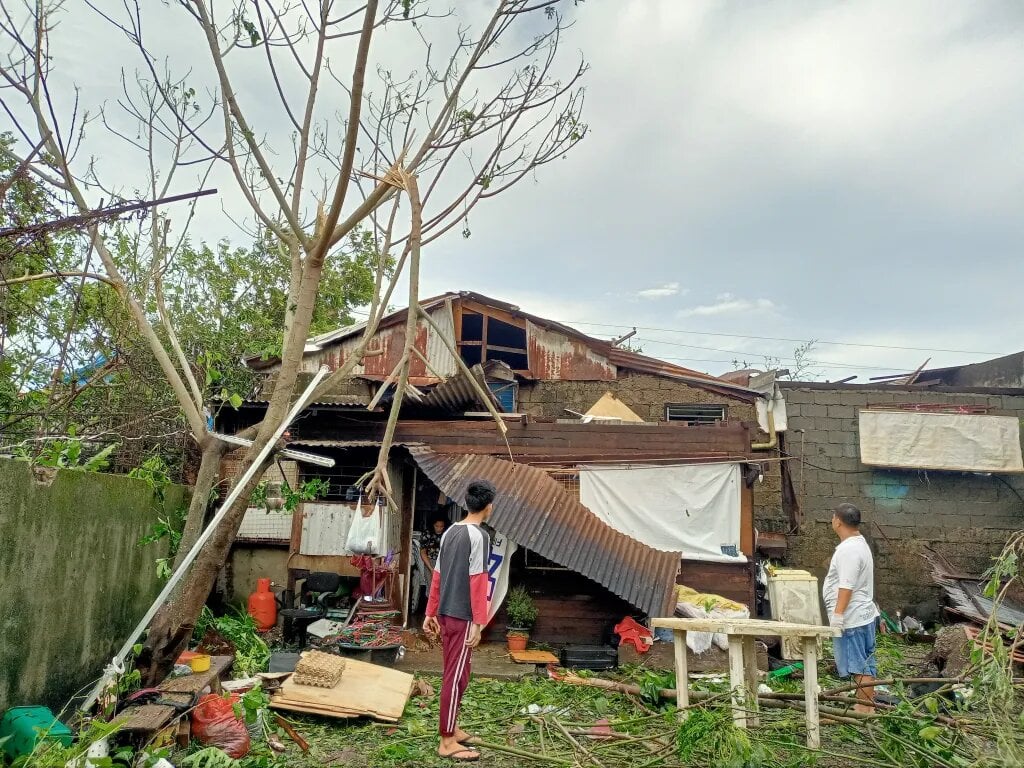
In October 2021, my father suffered a mild stroke and had to stop working to recover. We were able to get by and buy his maintenance medicine through the support of our relatives and family friends. As if we were not struggling enough, my hometown was leveled by super typhoon Odette in December 2021. Our roof was blown away and everything under it got soaked. For more than a month, we had no electricity, mobile signal, and we only had an intermittent water supply. I was in my third year at that time and it was around finals when the super typhoon struck. To comply with my remaining requirements, I went to charging stations to charge our flashlights and devices while I read my readings. At night by candlelight, I would write my papers by hand and then type them on my phone when I was able to charge the battery. I also contacted my professors once the mobile signal returned and relayed to them my situation. Despite the setbacks, I was able to submit my requirements on time. One of my professors told me that it was miraculous how I surpassed those challenges. Looking back, I sometimes cannot believe how I survived all of that. I was driven by my desire to win against my situation and I succeeded with the help of the people around me.
Although my family was not financially stable, I was not pressured and dictated upon to become anything they wanted me to be, which probably helped me to do well in my studies. There are expectations of me as the eldest daughter, but they never pressured me, which I greatly appreciate. My parents let me choose what path to take and only reminded me to focus and study hard so that I could achieve my dreams.
Study habits and survival tips for students
Regarding my studies, I always make sure that I have enough rest before I do my work. I listen to my body; if I am already sleepy then I take a break before proceeding again. A 30-minute to an hour nap will work wonders. I found myself more productive if I had enough sleep than when I did without it. Another thing that helped me with my studies was figuring out the type of environment that I thrived in. I am an introvert and I work best when I am alone and in a quiet area. I cannot do that with the crowded area we have in our house during the daytime so I work at night when everybody else is asleep because I easily get distracted by noise. Even when I was living in a boarding house with my classmates for my final semester, I tried looking for a spot where I could work peacefully or I asked them to keep it down when I was working. Knowing what environment works best for you can change the game in your studies.
If I feel down in the dumps or when I am at an impasse, I always think of the quote by John Green in his book Turtles All the Way Down, “Your now is not your forever.” Whatever bad situation I am in, it will come to pass. The disasters I have experienced are a testament to that; those disasters were not forever. The same also goes for happy moments; so it is important to cherish them. Life is too fleeting to keep overthinking. The change you are looking for will find you if you carry on. Padayon.
Plans after graduation
Now that I have graduated, my priority is to be employed so that I can help my family, particularly my siblings who are still in school. I would like to work in the government or to teach because I would like to give back to the people. I would also like to pursue graduate studies so that I can further my education and be updated with the trends in my field.
I know I have already mentioned this but I would like to say padayon to my fellow UP graduates and alumni as a closing note. I really like this binisaya word because it encapsulates the feeling of hope and the motivation to carry on in a single word. Wherever you are and wherever you will be, I hope you continue to padayon and never forget to serve the people. The people are counting on you.
———
Written by Nixie E. Serna for the UP Pagtatapos 2023 microsite. https://up.edu.ph/pagtatapos-2023/
This Filipino designer’s bags have made it into the hands of Doja Cat, Astrid Leung, and more
Andrei Yuvallos – @inquirerdotnet
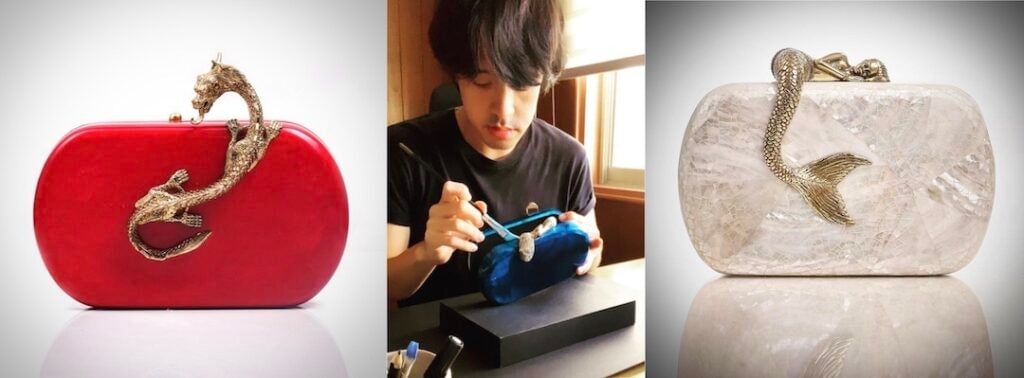
What do Doja Cat, the cast of “Crazy Rich Asians,” and Dolly De Leon have in common? They’ve all worn bags and accessories by Filipino designer Neil Felipp.
On the surface, the likes of Doja Cat, Dolly De Leon, the cast of the hit movie “Crazy Rich Asians,” and Bella Poarch don’t have much in common. But when you take a closer look—especially at their red carpet looks—you’ll quickly notice a very chic common denominator.
View this post on Instagram
They’ve all worn minaudières by Filipino designer Neil Felipp San Pedro.
“Honestly, I thought it was a joke,” San Pedro says about how his Suzy Wong minaudière ended up in the hands of Doja Cat during the 2022 New York Fashion Week.
Thinking it was a scam, San Pedro did his due diligence and found that Doja Cat’s stylists were the real deal. He sent over a few of his pieces, and the next thing he knew, his phone was ringing off the hook.
Doja Cat walked down one of the most iconic red carpet fashion events with his bright cherry red Suzy Wong minaudière.
View this post on Instagram
Minaudières are a fashion accessory that combines the aesthetics of jewelry and the functionality of a bag in one. It’s a fashion statement, to say the least, and the minaudières of the Cebu-born designer are red carpet mainstays.
Prior to his red carpet success and the launch of his eponymous brand in 2010, San Pedro graduated from the University of the Philippines Cebu majoring in industrial design (now product design).
View this post on Instagram
He apprenticed under fellow Cebuano and furniture designer Kenneth Cobonpue, whose pieces have found their way into the homes of Hollywood celebrities and literal royalty.
“A lot of the things I actually learned was through working with [Cobonpue],” San Pedro says of his three year internship with the furniture designer. “He’s still my mentor and one of my biggest critics today, and I love him for that.”
San Pedro’s craft though doesn’t fall solely on his shoulders. He works with a team of local artisans who deal in metalwork, shells, and other materials (who also happen to be some of his childhood friends) that bring his designs off the page and into real life.
A crazy, rich story
One of the landmark moments in San Pedro’s career so far has been the crazy journey of how his bag landed in the hands of Astrid Leung in the 2018 film “Crazy Rich Asians.”
“Kevin Kwan came [to the Philippines] to promote his second book ‘China Rich Girlfriend’ from ‘Crazy Rich Asians.’ During his book tour, one of my clients was carrying one of my minaudières. My friend showed it to him, and all of a sudden, he was so amazed by it. He asked, ‘Who made this?’”
The Suzy Wong minaudière made it to Kwan’s Instagram and instantly became a viral sensation.
View this post on Instagram
“Everybody started messaging me saying ‘Neil! Kevin Kwan noticed your bag!’ and I’d be honest and say, ‘Who’s Kevin Kwan?”
After the whirlwind attention, San Pedro reached out to Kwan through Instagram to thank him for his post. After mutually following each other, conversation flowed between the two creatives and how they approached their art.
San Pedro literally entered the world of “Crazy Rich Asians” in the third installment of the series, ‘Rich People Problems,’ where his Suzy Wong minaudière made a special appearance in the book. But something bigger was coming in the form of a screen adaptation.
“When the greenlight for the movie came out, he asked ‘Neil would you be open to let us feature your bags in the movie,” Kwan asked San Pedro. And his response was an obvious and resounding yes.
Kwan then sent a personal recommendation to the film’s director John M. Chu and costume designer Mary E. Vogt. Within 24 hours, they requested all of his available designs with a promise that they’ll only be used by primary actors.
In the end, his designs came out in three scenes and they were all used by one character: the iconic Astrid Leung.
“It was so beautiful because the only person I really wanted [to wear my designs] was Astrid,” San Pedro laughs.
View this post on Instagram
In one of the most important scenes in the movie (the one where she walks down the aisle at Araminta’s wedding with her grandmother after her huge fight with her scumbag husband), we see Astrid carrying a Siren minaudière.
According to San Pedro, it was a full circle moment because one of his more recent designs—The Phoenix minaudière—was inspired by her character.
“[Astrid] was actually the inspiration for the Phoenix because of how she presented herself and how she got out of that horrible marriage.”
View this post on Instagram
With a growing client list of both local and international celebrities, San Pedro makes the case for Filipino craftsmanship and excellence deserves attention on the global stage. All of it is for a bigger purpose, though.
“Everything I do is for the Philippines and Cebu. It’s more than just me as a brand. It’s a gift to be a platform for the craft.”
Source: https://usa.inquirer.net/136038/this-filipino-designers-bags-have-made-it-into-the-hands-of-doja-cat-astrid-leung-and-more