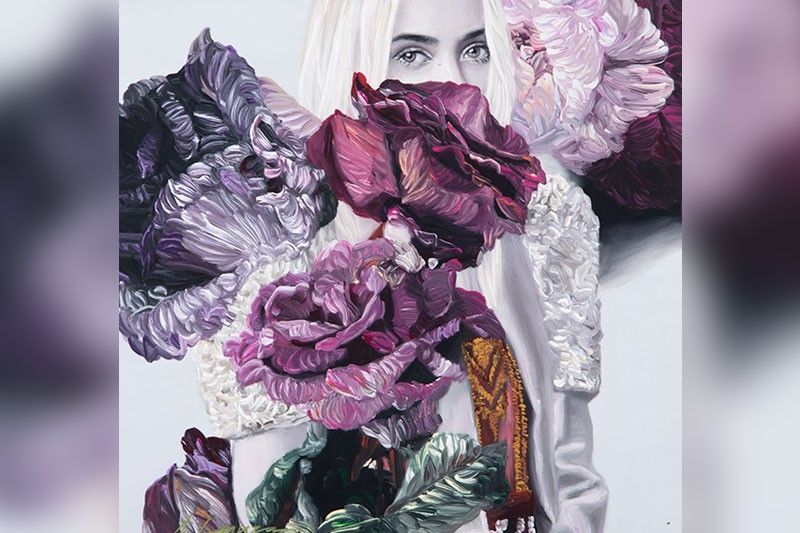
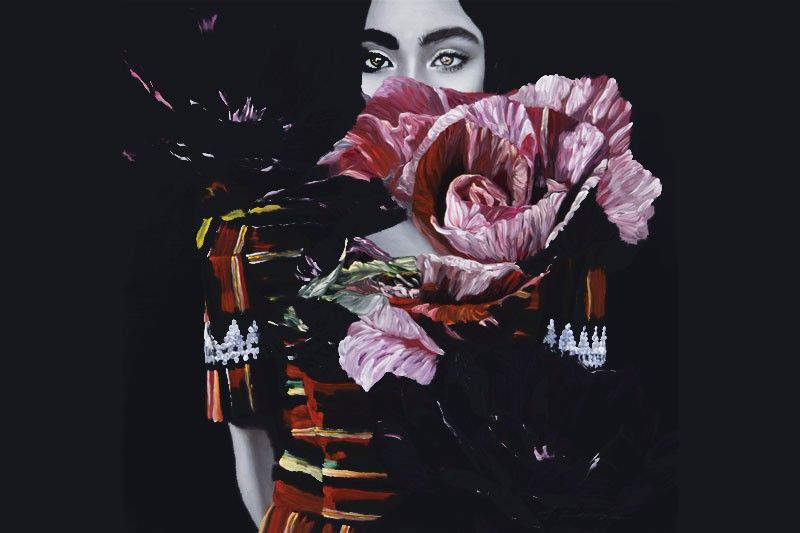
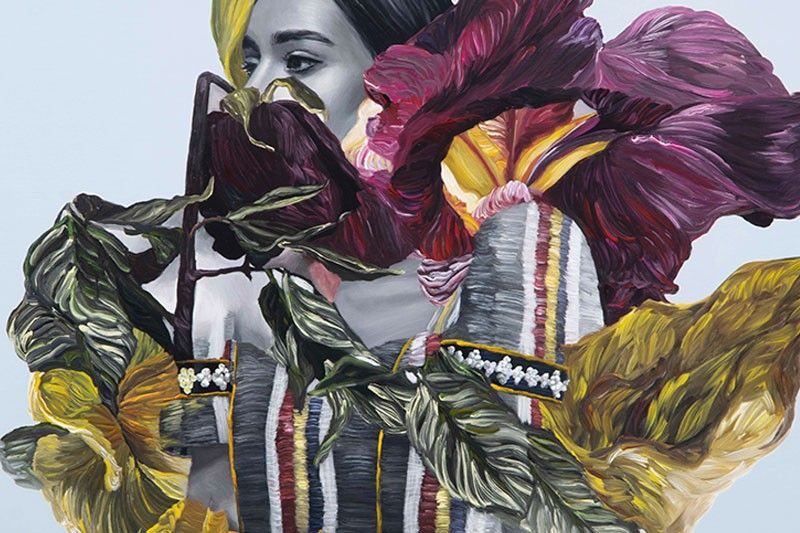
“Devotion” is part of Aileen Lanuza’s recent solo exhibit titled “A Symphony of Roots.”
MANILA, Philippines — Contemporary visual artist Aileen Lanuza presents flourishing tapestries that showcase the indigenous weaves of Mindanaoan tribes in her solo exhibit “A Symphony of Roots.”
For her, these are treasures inherited from a rich history by present-day Filipinos — stories that we must continue to tell and live today.
The resplendent tune of shared memories once whispered in the shade of grand narratives resonates in the works of Lanuza. These serve as a reminder of the bonds that transcend time and place.
“Cor Rosae (The Heart of a Rose)”
Working closely with Mindanaoan artisans of Kaayo, which is dedicated to telling our woven stories, Lanuza hearkens back to our roots, using indigenous weaves from tribes across the region in her compositions.
Founded in 2016 by the mother-and-daughter team of Mary Ann “Baby” Montemayor and Margarita Nograles, clothing line Kaayo brings Mindanaoan weaving heritage to the world, collaborating with women from the T’boli, B’laan, Mandaya, Bagobo Tagabawa, Tagakaolo and Ata Manobo tribes to raise awareness of, preserve and reimagine their individual weaving methods and traditions.
Each thread, each brushstroke traces a strand of a long and rich history, woven into symphonic tapestries. Each creation carries the weight of ages past, a tale of triumph and struggle that echoes through time.
“Blue Aestas Caelum (Blue Summer Sky)”
“I share the same passion as Kaayo has, in maintaining our roots and bringing forth our custom indigenous weaves that are inherently Filipino,” Lanuza said. “It is important for me in my works to highlight the best of what we are, maintaining our identity and always bearing the power to be who we are.”
Relating her experiences as a modern Filipina, Lanuza delineates a heritage that is not just a relic of the past, but whose tune we always carry, resounding in everything we do and constantly redefining who we are and who we can be.
Her signature floral compositions follow the movement, form and eloquence of Maria Clara, capturing its timelessness, its quiet intensity, and the enduring flourish of its beauty. As she composes this symphony of roots, the pieces interweave destinies of those who hear its call.
The artist, Aileen Lanuza (b. 1981), studied Fine Arts, majoring in Visual Communication, at the University of the Philippines Diliman. In 2008, she had her first one-woman show. Since then, she has made the rounds of different countries around Asia and North America to showcase her works.
Her style has consistently focused on women and the female experience; from realistic Filipinianas and pop art homages, to impressionistic self-portraits and enigmatic figures, she invites her audience to contemplate on the emotion and context of her subjects. Depicting both tenderness and strength in one picture is what makes Lanuza one of the most sought-after Filipino contemporary artists today.
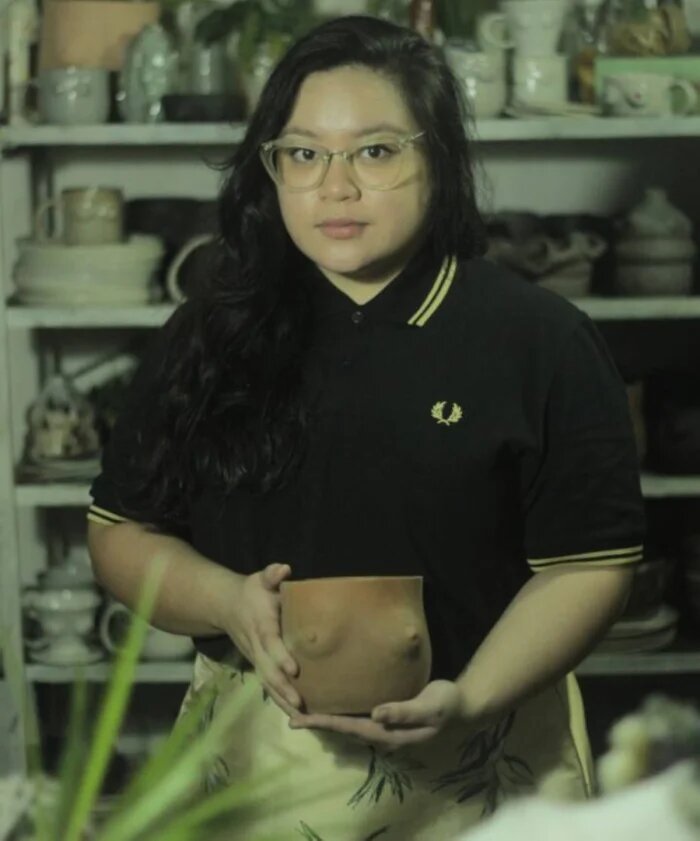
Alyssa Kangleon is a ceramic artist whose pieces celebrate femininity and sculptures. In her works, she also explores the relationship between community and carework, as humans deal with social, economic and environmental uncertainty.
Alyssa graduated with a Bachelor of Arts in Broadcast Communication from the University of the Philippines (UP) College of Mass Communications in 2019. Simultaneously, she took Wheel Throwing Pottery and Handbuilding Ceramics from the UP College of Fine Arts Ceramic Studio from 2017 to 2018.
The artist creates pieces that celebrate femininity.
How did you become a ceramic artist?
I found ceramics during a challenging time in my life while struggling with my thesis and university graduation. It feels trivial now, but in those days it was comforting and encouraging to see my pottery get more refined the more time I spent in the studio. It gave me a sense of control. I eventually learned that the art of making ceramics is an exercise in letting go of control. Ceramics gave me the space to express myself, and I was lucky to have people interested in some of my work enough to buy them. I only ever really wanted to keep making ceramics and would take odd jobs to be able to afford more time in the studio. Thankfully, the support I received from people has enabled me to build my home studio and has allowed me to expand into other possibilities.
Was there a time you couldn’t produce anything? How did you overcome it?
I’ve come to realize that every time I feel stuck, it means I’ve chafed against my thoughts for too long. Now I take it as an invitation to do something physical to ground me into my body. I love going on walks. It’s incredibly humbling to witness the trees achieve stillness while persistently evolving. I also have a lot of other hobbies like birding, reading, foraging, pickling, cooking, drawing, and making prints. These are the things that make up my days and they often find their way into my ceramic practice as well. Making ceramics is also something that grounds me, it just doesn’t feel that way sometimes when I think about it too much. But once I start working with the clay again, I’m reminded of its calm and malleable nature and I feel possible again.
What do you hope to achieve five years from now through your art form?
I hope to be able to represent my interests and advocacies in a more timely manner. At the moment I’m finally producing work that aligns with my love for native plants, but that’s an interest I have held for three years. I have a tendency to keep things to myself and let ideas ferment, and perhaps that is just my process, but I hope to practice a little more urgency.
At the end of the day, what puts a smile on your face?
In the mornings, I buy fruits to put in the fridge that I may later enjoy at the end of the day. I often think about the fruit’s journey and feel immense gratitude that somebody tended to the tree that produced it, that insects or animals or maybe even people aided the pollination process, and that somebody picked this, and transported it, and stocked it in the stands where I buy it. It feels miraculous after all this that I get to enjoy it and it always floods me with tenderness.
Building on Albert Einstein’s work, a Filipina physicist and an international team of researchers recently discovered that a special class of subatomic particles can be described using concepts from the famous scientist’s Theory of Relativity.
UPD-CS NIP associate professor Dr. Gennevieve Macam and her colleagues are working to understand the behavior of a relatively new subatomic particle called a Weyl fermion. (Photo credit: Dr. Gennevieve Macam)
UP Diliman College of Science National Institute of Physics (UPD-CS NIP) associate professor Dr. Gennevieve Macam and her colleagues were investigating Weyl fermions, exotic subatomic particles that are similar to electrons but have no mass. They found that the behavior of these particles can be understood by adapting Einstein’s ideas on causality.
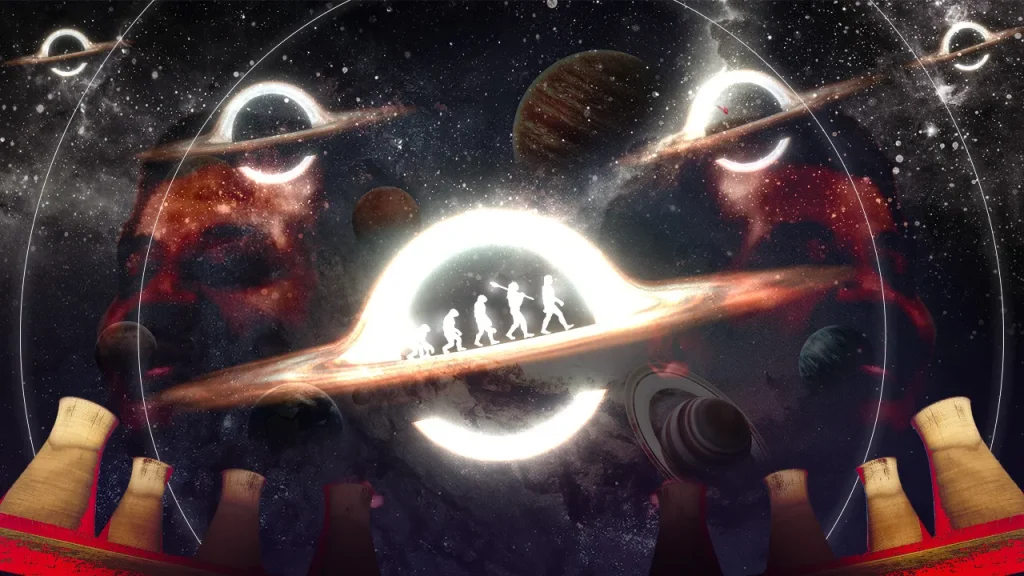
Causality refers to how one event can directly lead to another event in a cause-and-effect relationship. Einstein took this idea further when he realized that nothing can travel faster than light. This led to the concept of “light cones,” which represent all the possible paths that light—or any signal moving at the speed of light—can take from a given event in space and time. Anything inside the light cone of an event could potentially be influenced by that event, while anything outside the light cone cannot be affected by it due to the limitation imposed by the speed of light. The outer boundary of this cone is called the “event horizon.”
Dr. Macam collaborated with Prof. Guoqing Chang of Nanyang Technological University and his team. They found that these concepts, which normally apply to space and time, could also be used to describe the behavior of Weyl fermions in terms of energy and momentum.
“Our work shows how Einstein’s equations can be adapted to describe quantum materials,” Dr. Macam said. “This paves the way to a better understanding of how the strange quantum world and our everyday reality are intertwined.”
Weyl fermions were first theorized by German physicist Hermann Weyl in 1929 but their existence was only proven almost a century later, in 2015. Due to their charged but massless nature, Weyl fermions may have future applications in electronics and computers.
References:
Chiu, WC., Chang, G., Macam, G. et al. Causal structure of interacting Weyl fermions in condensed matter systems. Nat Commun 14, 2228 (2023). https://doi.org/10.1038/s41467-023-37931-w
For interview requests and other media inquiries, please contact: UPD-CS Science Communications ([email protected])
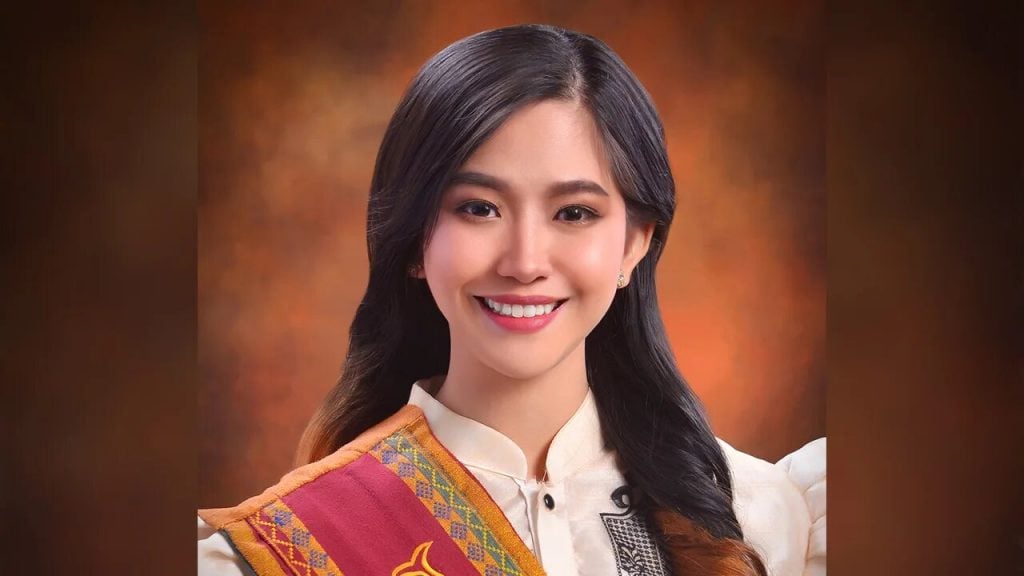
Trisha Amistad from UP-Cebu is the sole Sugbuanon to achieve a position in the top 10 of the 2023 Psychometricians Licensure Examination
CEBU, Philippines – Trisha Amistad made her family proud by becoming the only taker of the August 2023 Psychometricians Licensure Examination (PLE) from Cebu to make it to the topnotchers’ list.
Amistad, an alumna of the University of the Philippines – Cebu (UPC), was attending a funeral mass for a friend’s relative on the night the PLE results were announced.
“At first, I was just looking at our group chat with my classmates and scrolling over the list of the names of the exam passers but then, I checked the list of schools and saw UPC and wondered who got in the top ranks,” Amistad told Rappler in an interview on Thursday, August 10.
Lo and behold, the 24-year-old Amistad realized that she was more than just any exam passer and registered psychometrician – she was a topnotcher and the only one from the province of Cebu.
Amistad ranked 10th with an 87.20% rating.
“I remember being so happy that night and when I got home, my family was so excited for me… My mother called me and told me that she already knew that I was going to excel,” Amistad said.
Raised a champ
Born in Lapu-Lapu City on January 9, 1999, Amistad’s family saw to it that she was well-supported and loved.
Her father, Dino, was an overseas Filipino worker during her younger years, and her mother, Evangeline, was the caretaker of the family. Amistad’s grandparents also took turns watching over her and her siblings who were taught the value of self-belief.
“I had this lolo (grandfather) whom I cherished so much, who I looked up to… He would always say that I really understood things and that no matter where I was, I was going to excel,” Amistad said.
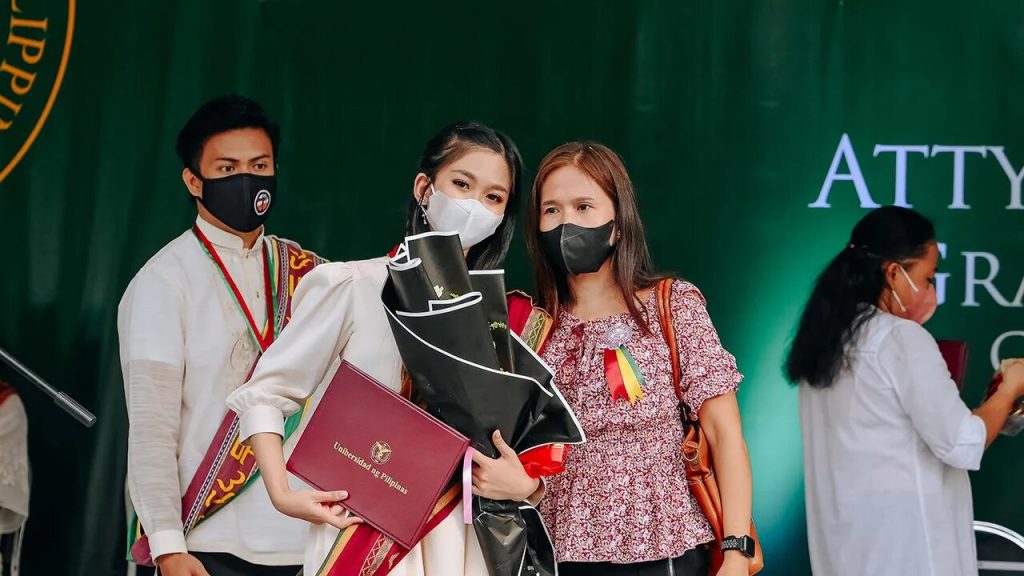
MOTHER AND DAUGHTER. Trisha Amistad (left) and her mother Evangeline Amistad (right) on the day of her graduation on July 29, 2022 at the University of the Philippines – Cebu. – courtesy of Trisha Amistad
The topnotcher recalled moments of sharing her problems with her grandfather, Joel, who would listen patiently and remind her that she was more than capable of anything. The comfort of being listened to helped her go on with her days and achieve more as a student.
But Amistad’s drive in the academe, she said, was mainly attributed to the efforts of her mother.
“She already saw the potential in us way back in nursery because I guess at that time, we could already read so she wanted to nurture that gift,” Amistad said.
As early as age 3, Amistad’s mother invested time and money to provide them with study loads, books, and other learning materials in hopes that it would instill a studious and disciplined mindset in her children.
According to the achiever, this paid off in the end and has been helping her even after college. Amistad thanked her mother for everything she has done for them.
Perseverance
From preparations to the final day, Amistad believed that working hard for one’s dreams matters.
“One of the lessons I take to heart is that you just have to believe in yourself, in your capabilities, and if you have that discipline in you, use it and if you don’t have it yet, build it,” the topnotcher said.
She said there is “no perfect formula” to pass the exams and that one must find the initiative to seek more knowledge by doing research, attending sessions at review centers, and planning days ahead.
“It’s a matter of urgency if you will and sometimes, if you cannot handle heavy subjects, you can do light subjects. I prefer to alternate between light and heavy subjects when studying,” Amistad said.
She also emphasized the significance of incorporating opportunities for relaxation and leisure into daily routines. Her preferred avenues for unwinding include engaging in video games, online shopping, and indulging in anime.
Holding on
Before the exams, Amistad worked as a marketing officer of the Cebu-based hobby convention Otakufest, as a freelance illustrator, and as a human resources specialist for a private company.
“Now, my priority is to become a psychometrician of a company,“ Amistad told Rappler.
Amistad said she wanted to remind both her fellow exam passers and those who didn’t make it to hold onto the purpose of their dream profession, which is to champion mental health.
“Even if you are not in that profession, you can still do that. In your little ways, you can help the community, your friends, even yourself, and I think that’s just as noble and helpful to the community,” Amistad said. – Rappler.com
“I have been chasing excellence my entire academic life, but reflecting on my college stay, I was actually missing out in life.”
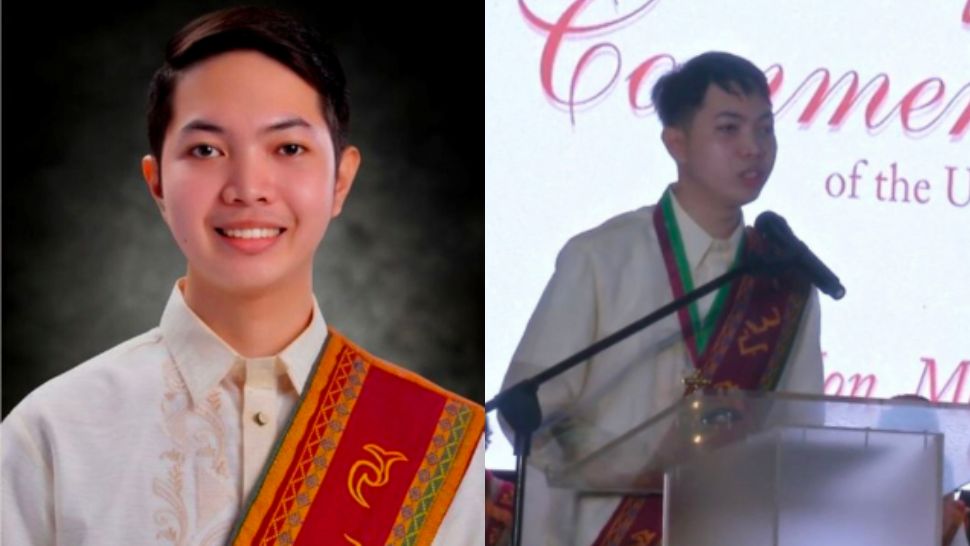
IMAGE FACEBOOK /UP CEBU, SCREENSHOT FROM MY TV CEBU
As parents, it is expected that we hope our children will strive for good grades when they enter school. However, an honor student from the University of the Philippines Cebu reminds us that being book smart is not enough.
Last July 21, 2023, UP Cebu held its graduation ceremony, and its top graduate, Edsel Suhayon Codoy, delivered the valedictory speech. He became the second Summa Cum Laude since the university’s establishment as a constituent university in 2016.
The full video of Codoy’s speech was uploaded by MyTV Cebu on Facebook and has now garnered over 68k views. With permission from Codoy, here’s a transcription of his 11-minute speech, which shares his inspiring journey, including his regrets and learnings along the way.
Transcript: UP Cebu Summa Cum Laude Edsel Codoy Speech
“My biggest regret in UP Cebu was actually studying hard. Wait, wait. Let me finish.
Studying hard and doing nothing else.
You know, I have been chasing excellence my entire academic life, but reflecting on my college stay, I was actually missing out in life. I missed out on the unique opportunities for personal growth, exploration, and building meaningful connections.
Since high school, I have always been reclusive and shy, socializing in the most minimal levels of interaction. The most convenient people I had around back then turned out to be the closest circle I have.
“I have been chasing excellence my entire academic life, but reflecting on my college stay, I was actually missing out in life.” —Edsel Codoy, summa cum laude, UP Cebu
A few years forward, I was able to bring the same reserved behavior in college. And I would have to say, it got the best of me. I passed on a lot of things in college. I was not joining orgs. I was declining offertorship nominations. I was only going with the same group of people I would meet on a class basis. And even in school events and programs, I remained as an observer.
Because while my block mates and friends were genuinely trusting my abilities, I sadly was not. Only recently, I was able to recognize that the self-restraint that was holding me back was coming from my fear of failure.
As a result, I settled with what I have been doing and what I do best. Spending all my time with school.
On the bright side, it brought me to where I am now. However, it took me a long time staying in that comfort bubble before I realized that I was actually only becoming book smart. I was in fact sabotaging my own personal growth by passing on the opportunities openly offered to me.
Now I’ve come to my senses, I’m starting to broaden my horizons one action at a time. I’m starting to unlearn self-doubt and to reframe failure as another learning experience.
Right now, I’m actually in the middle of my second internship, taking on a tech role I know little about. Admitting that I have so much more to learn and so much more to try.
My friends know how much I dread public speaking, but I am taking this on as a challenge and a privilege. I am saying this to encourage everyone to take calculated risks and embrace a growth mindset. Don’t be too hard on yourselves. Cultivate self-compassion. We do this so that at the end of the day, we leave no regrets.
I congratulate everyone for having made it this far.
The term commencement might seem counterintuitive and contradictory to the actual matter of today’s gathering, that is, to celebrate the culmination of our studies.
However, it is more symbolic than that. It actually refers to the start of our journey as we transition to much bigger and bolder plans in life.
May that be pursuing higher education, I mean postgraduate education, starting a professional career, or prioritizing personal growth. And to gather without transition is a realization of a bigger influence and a bigger social responsibility.
We will be seeing ourselves in various industries and sectors, taking over bigger roles and affecting many lives. Our future decisions and actions will shape the world around us. Let us apply the skill sets and expertise we have built in this university in addressing national challenges, hoping to effect a positive social change.
I, for example, as a person in tech, envision the use of AI technologies and large language models to build a more just, sustainable, and equitable world.
I know many of you have tried using generative AI applications. Chat GPT to name one, at least once. We are witnessing a very big potential for it to revolutionize various aspects of our lives.
For instance, AI has been helping scientists hasten and optimize drug discovery, which in turn makes these drugs less costly and more accessible to people of all classes. AI is also able to fill the gaps in the education sector with platforms facilitating personalized learning experiences for students. The technology is basically out there, waiting to be harnessed as a tool for positive social impact.
This is the time for us, iskolars ng bayan, to find our niche so that we can see what we can do and locate our place in the collective for a future gain for all Filipinos. And being able to hold greater positions, we will also be dealing with greater enemies and demons in the real world. The ethical dilemmas will not come from the books anymore. They are real. They are real and they are critical.
We might see ourselves confronted by these dilemmas manifested in issues around social injustice, environmental degradation, and political corruption, as well as economic inequality. In these times, may we remember the mandate we accepted when we entered the grounds of UP Cebu. That is, to serve no one else but the people, to stay loyal to the public interest, and to uphold the UP motto, honor and excellence at all times. The true task of education is not from the grades we get nor the distinctions we see. It is evaluated on the choices we make when no one else is watching, as we leave the university and fulfill more civic duties.
Although too idealistic, but let us rectify the broken system and let us never allow ourselves to be consumed by it. Let us not lose hope and let us not give up on this country. After all, we are the country’s hope and we are the country’s future.
As we gather here today, let us remember and acknowledge the significant people that we have met along the way and the key contributors that made it possible for us to be part of this memorable ceremony.
To our parents, parent figures, and family members, we greatly thank you for your unwavering support from start to finish, for being the foundation of our core values, and for being our immediate fallback when things start to get overwhelming and unmanageable. Your nurturance and sacrifices are not left unnoticed. You truly deserve a heartfelt “Daghang salamat” and a round of applause.
To the lifeblood of our university, the teachers, instructors, and professors know that you have immensely influenced our perspectives in life, and we are truly grateful for that. You never fail to incorporate essential life lessons in your teaching, which we so do appreciate as they build up lifelong learning. You have shaped our minds and mentored us to the best of your abilities. And during the height of the pandemic, while us students had struggled adapting to the rapid transition to distance learning, our teachers behind the curtain also had their fair share of hiccups and difficulties in delivering the best teaching they hoped to do. Their passion and dedication are unwithering and unparalleled. With that, we should acknowledge them with a big applause.
To our inner circle, the friends we met in UP, and the classmates we academically struggled with, thank you for being there as someone we can often relate and connect to. Thank you for hearing our rules and celebrating our successes alongside us. Thank you for checking up on us and not leaving us behind. University life definitely wouldn’t be the same without you.Big shout out to block B.
To the source of strength, inspiration, and all grace, we thank our creator, God, for orchestrating the universe in our favor and for giving solace to the faithful.
To UP as an institution, you are a lighthouse. Like a lighthouse, you have guided us to the direction befitting for us, iskolars ng bayan, and that is towards the service of the people. You have awakened our sleeping consciousness and opened our eyes to the real state of the nation. You have shed light to the reality outside, in the streets and communities of the Philippines. You have provided us opportunities for critical thinking and fostered academic freedom, which made our education more powerful and transformative.
And most importantly, to the Filipino people, to whom we owe our free education, we will make every cent of our investment worth it. As expected from us, iskolars ng bayan, we will strive to contribute positively to nation building and alleviate the suffering of those in the marginalized sector.
To end my speech, I’ll leave you this reminder from Atty. Leni Robredo herself. “You do not lose sight of what you believe in. You do not lose sight of the goal. You drown out the voices because there are bigger battles to fight.”
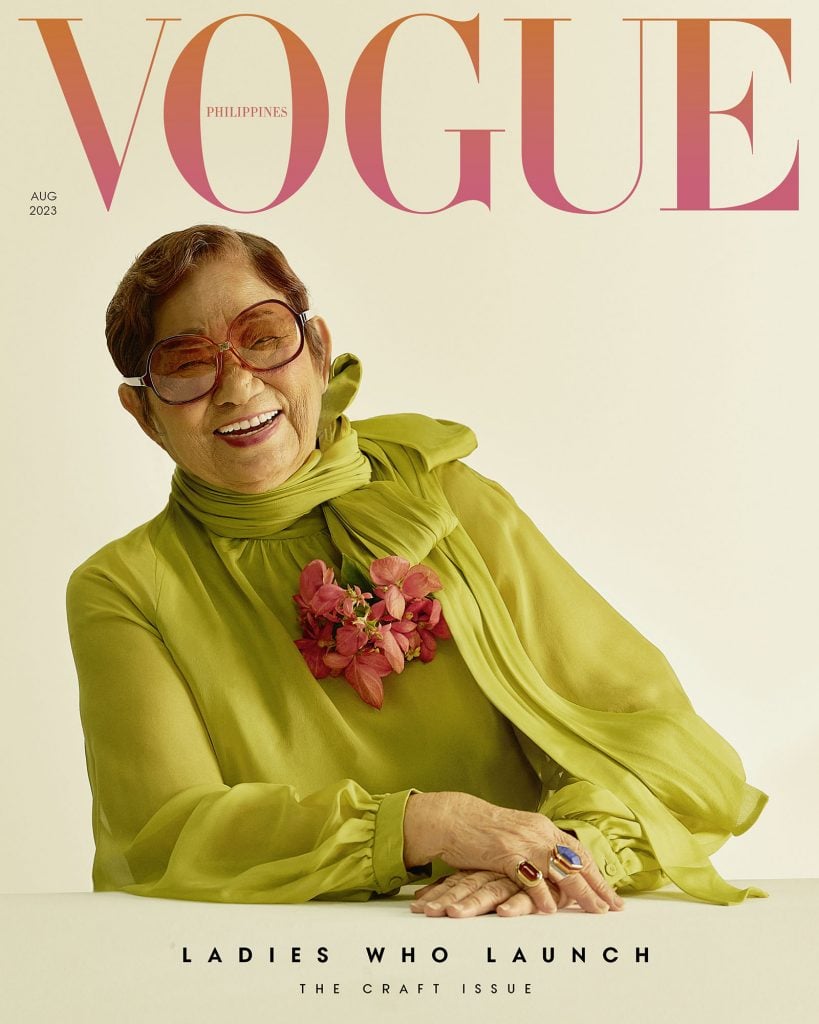
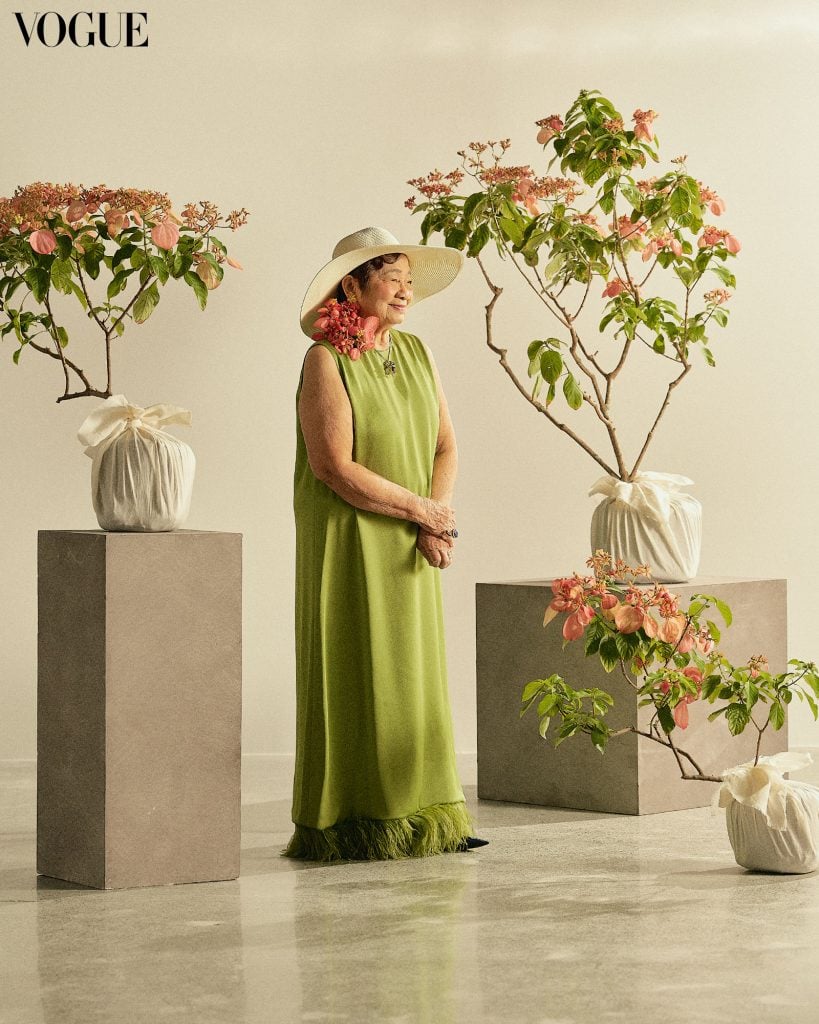
The Filipino geneticist has garnered many accolades in her lifetime, including having two flowers named after her.
Dolores wears CAROLINA HERRERA dress, BALENCIAGA shoes, KULTURA hat, and J MAKITALO necklace. Photographed by Artu Nepomuceno.
Ninety-one-year-old National Scientist Dolores Ramirez began teaching at the University of the Philippines in 1956. She explains her ethos as a professor: “The genetic component in one’s aptitude for mathematics is only 12 percent. That means the gene contributes only 12 percent, and 88 percent comes from the environment. You can’t blame your parents if you’re not good at math. The biggest factor is your math teacher. If you know this as a math teacher, you should teach math in a way that your students will learn. How do you do that? You will probably make it simpler and be more encouraging, especially with children.”
As somebody who has advanced the field of plant biochemical genetics and cytogenetics in the Philippines, Ramirez certainly believes in logic and the scientific method. “I’m also a product of somebody else’s mentoring, so I’m sincerely part of the chain. There are many students, such as my students, for example, who have widened the scope of what I’ve done,” she explains. “In genetics, there’s a wide latitude. I specialize in one section, and my students have gone forward and sidewards in expanding the science. My research is invariably communicated to students, which adds to my accomplishments. My students will bring it to the next level. I’ve had several generations who have done that and have continued.”
Ramirez also emphasizes that throughout her life, the generosity of the people around her helped her achieve. She says that she was fortunate to receive government resources to conduct her research and has had “a lot of good breaks and good bosses.”
Genetics is a basic science, she explains, but in its application, you can create something new. In plants, for example, you can produce a new variety that has more yield, is more attractive or beautiful, or is more resistant to stresses, insects and pests. “I do not directly produce those varieties yet, somehow, I indirectly contribute to national development,” she says, adding that she plants seeds, so to speak.
Before being named National Scientist for the Philippines, Ramirez had been the SEARCA (Southeast Asian Regional Center for Graduate Study and Research in Agriculture) Professorial Chair for Genetics, a recipient of the Gregorio Y. Zara award in basic research and the Rizal Pro Patria award for outstanding achievement in science. She also received the UP Professorial Achievement Award in agriculture. But she’s more popularly known for having a gumamela hybrid and a mussaenda hybrid named after her.
“When you work, you have a goal in mind that is sometimes even beyond your own,” she says. “These add to your accomplishments. And your accomplishments contribute to your self-worth and essentially spread goodwill.”
By Ria De Borja. Photographs by Artu Nepomuceno. Beauty Editor: Joyce Oreña. Fashion Director: Pam Quiñones. Makeup: Gery Peñaso of M.A.C Cosmetics, Ting Duque. Hair: JA Feliciano, Mong Amado. Art Director: Jann Pascua. Production Design: Justine Arcega-Bumanlag. Producer: Bianca Zaragoza, Anz Hizon. Multimedia Artists: Gabbi Constantino, Tinkerbell Poblete. Production Assistant: Zofia Agama. Photographer’s Assistants: Choi Narciso, Jordon Estrada. Stylist’s Assistant: Ticia Almazan. Production Design Assistants: Gabrielle Mantala, Geber Cunanan, Jan Abal, Olderico Bondoc. Makeup Assistants: Charisma Contaoi, Leilani Samson, Lorrine Villamayor. Interns: Jean-Jacques Girod-Roux, Sophia Lanawan.
It is the job of the UP-Diliman College of Science communications team to mine mountains of information from technical scientific papers and produce bite-size information digestible for public consumption
MANILA, Philippines – Science as a topic of discussion can be a real head scratcher. Writing about it, and parsing through technical scientific papers, can make any journalist break into a sweat.
As science and technology expand in a fast-changing world, there is a pressing need to communicate breakthroughs. But there is a gap because communication is left far behind by the bullet-train speed of breakthroughs.
Among those pushing to narrow that gap is a science communication team based in the University of the Philippines-Diliman College of Science (UPD-CS).
The UPD-CS Science Communications team dissects the work of Filipino scientists and researchers, digs the angle that they think would pique the readers’ interest, and breaks down the technicalities of scientific papers for ordinary people to understand. It’s like they mine this mountain of data and produce bite-size information digestible for public consumption.
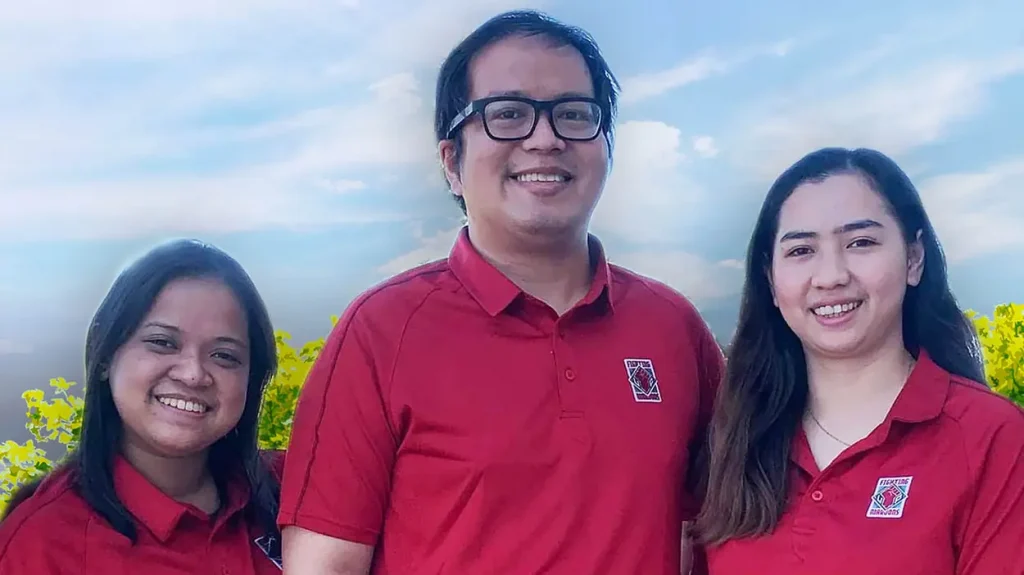
It is a lean team, headed by science journalist TJ Dimacali, and includes a pair of senior science communicators – Eunice Jean Patron and Maria Asheidee Masayon, and one graphic designer Genesis Anne Mercado.
While the work of making the public understand dark quantum matter, the origins of humanity, or algorithms that make sense of an ancient writing system are downright daunting, the team sees their inability to comprehend as the first step towards effective storytelling.
“One thing that we tried to keep in mind is that that [failure to comprehend] can also be a strength because we’re in the same shoes as the public we’re trying to reach out to,” Dimacali told Rappler in an interview.
“If there are things that we don’t understand, most likely the public doesn’t understand that too,” he added. “And if we’re able to condense it into words that we’re comfortable using, [when] we can wrap our heads around it, then it’s likely the public will understand it too.”
Storytelling is a two-way street
The science communication team is housed in the College of Science Administration Building, smack in the middle of the university’s National Science Complex and surrounded by the institutes of chemistry, biology, mathematics, geology, marine science, and molecular biology and biotechnology.
This is one of the strengths of their team, Dimacali said. Working within the college affords them immediate access to journals, related literature, scientific papers, and the scientists themselves. It makes doing their homework easier.
The team monitors new studies that come out and vets research they can storify. Sometimes, scientists themselves approach them to make space for their research. They interview the scientists involved and the dialogue continues with them as they write the story.
Afterwards, they show the full draft for the scientists to check. They then publish online and send the press information to media outfits. The team also explores making social media posts, and even videos, although this is something they are still experimenting with.
COMMUNICATORS. The UPD-CS Science Communications team collaborate with scientists to tell the story in their research for the public’s consumption. Photo from UPD-CS Science Communications
Aren’t there worries that laymanizing stories would dilute the science?
“You can’t info dump the public,” said Dimacali. But also, he said, they don’t blame scientists for feeling anxious over attempts to simplify their research.
“Almost all of them are PhDs. So they spent years studying these things…. And then suddenly condensing all of these into five minutes or a 500-word article,” said Dimacali. “Parang ang hirap ‘di ba?” (It’s hard, right?)
They remind scientists that a press release is just part of a bigger and ongoing initiative to communicate science to Filipinos.
It’s a two-way street between scientists and the communicators, where ideas are exchanged, the main story pinned down, and the language refined. But there is still a long way to go. In other countries, science communication is more developed because media practitioners grew alongside science, said Dimacali.
For example, the United States boasts many popular science magazines. The first issue of the famous yellow-bordered publication National Geographic was published back in the late 19th century.
It was around this time when a vaccine against rabies was invented, the world’s first coal-fired power plant was built, and electromagnetic waves were detected by German physicist Heinrich Hertz.
Wired to tell stories
“I like to think of science as the story of humanity,” Dimacali said. “It is the collective story of all of us. And we are built to tell and to understand stories.”
In the age of multimedia, there are more ways to tell science stories and ideas that do not necessarily pander to a crowd.
Pop culture has been an effective platform. Marvel Comics and its movie adaptations, for example, borrow scientific concepts to develop their plots and characters.
In one instance, American astrophysicist Neil deGrasse Tyson, a known advocate of science literacy, tried to explain the science behind 2019 superhero film Avengers: Endgame. Tyson talked about the concept of the rare metallic ore vibranium found in fictional African nation Wakanda, or the ever-returning shield of Captain America.
More recently, animated film Spider-man: Across the Spiderverse explored the concept of multiple universes or the “multiverse.” This is a concept that acclaimed film Everything Everywhere All At Once also tried to tie in with an immigrant narrative and the dynamics of a strained mother-daughter relationship.
Pop culture has provided an easy way “to get ideas that people are familiar with…and then guide them towards the scientific explanations behind them,” said Dimacali.
For the UPD-CS Science Communication team, they try to relate scientific concepts with Filipino pop culture.
One example is their story written by Patron enumerating the possible scientific explanations behind famous Filipino folklore stories.
But they are also cautious to note that using Western science’s lens is just one way to explain local practices and that “modern science doesn’t always necessarily have to debunk folk beliefs.”
Another story was about the ongoing research on tracing genetic ancestry in Metro Manila, linking the research’s difficulty to wars that ravaged Manila and the ghosts left behind.
“We can think of the lost genetic variation as the ghosts of the people we lost,” research leader Frederick Delfin was quoted in the story.
Science communication needs creativity to thrive and engage the public. Speculative fiction writer Ursula K. Le Guin once said that her fiction doesn’t predict the future, but rather describes contemporary life including science and technology.
Le Guin believed these descriptions, aided by imagination, shine light to certain truths. – Rappler.com
Dance artist Japhet Mari “JM” Cabling majored in Philippine Folk Dance at the Philippine High School for the Arts (PHSA) and graduated cum laude from the University of the Philippines (UP) with a degree of Bachelor of Music (Dance). JM is the first graduate of the CCP Choreographers Series with his work “Bent” (1st place in the Wifi Body New Choreographers Competition 2014), “Nothing Special” (premiered in KoryoLab 2017; finalist at the 2019 Yokohama Dance Collection 2019 and recipient of Alvin Erasga Tolentino Koryograpiya Award), and “Ang Lihim ni Lea” (as one of the featured artists of NeoFilipino 2019).
Currently, JM is the Program Director of Hiraya Fellowship Program and full-time dance faculty at Guang Ming College Tagaytay.
We interviewed JM recently, and here is that conversation.
Dance artist Japhet Mari ‘JM’ Cabling CONTRIBUTED PHOTO/PAW CASTILLO
How did your journey in dance begin?
I was a fan of my eldest brother who was a dancer in our elementary school. I joined the same dance troupe he was in and I found myself enjoying performing those kinds of dances. Later, my parents enrolled me in Pangalay lessons with Ligaya Fernando-Amilbangsa. They would drive me every Sunday from Cavite to Marikina, and even joined my classes. The classes were worth it, because I passed the scholarship auditions for the Folk Dance program at the Philippine High School for the Arts (PHSA) dancing Pangalay. I eventually graduated from PHSA with a MARIA scholarship and Artistic Excellence Award. After high school, though, I was still clueless what to do after college. I wanted to pursue learning Philippine Folk Dances but there were no college programs specifically catering to just that. And so, even without any background in classical ballet or contemporary dance, I still auditioned for the Dance Program of the University of the Philippines (UP), Diliman College of Music. I passed the course and my whole education there changed my views on dance. Dance is not just for novelty.
While studying, I took all the opportunities possible to explore. I attended different workshops, performed in different festivals in the Philippines and abroad, choreographed for plays in Dulaang UP, joined competitions under UP Dance Company and many more. If before It was during this time that I saw myself taking on dance as a career. Right after college, I dove into doing freelance work for dancing, choreographing and teaching dance-trusting that these jobs would sustain me. And they sure did. Even if there were times I would be uncertain about whether the projects would actually build my career, offers to work kept coming and coming. Eventually all the fears and hard work paid off. Mnetwork of collaborators and the experiences I’ve gained working in different environments has shaped me into the artist I am today.
Can you name two artists you admire the most, and describe to us how their creativity influenced you?
There are plenty but top of mind are my folk dance teacher in high-school, Victor Flor, and one of my challenging mentors in contemporary dance at UP, Ma. Elena Laniog-Alvarez.
Sir Flor was my first teacher in choreography. As a Folk Dance Major in PHSA, we did learn our dances, but he was also very hands on in making us appreciate what we were doing. He was invested in giving us tools to be able to have a deeper understanding of the dances and our culture. Teacher Elena on the other hand was one of my contemporary dance teachers, and is one mentor I look up to because of her sincerity in the craft and the care she gives to her dancers.
They might not be aware of this, but they taught me to ground myself, to be more intuitive and trust myself and the process without being swayed easily by doubt. Because for them, there is enough room for all of the artists out there. They influenced me to look for my own space and own way of creating art.
How does ACC grant help you in your art form?
I focus on storytelling as a choreographer. My experiences have given me tools to tell stories well, but I know there is more to learn and the classes I’ll be taking under the fellowship will certainly widen my range of tools. While I am always thankful for getting work, I’m grateful for this time to take a breather from my career here through the ACC grant in New York. I will be able to pause, reflect and focus on refueling myself again.
Lastly, because I am currently teaching young dancers on scholarship in Guang Ming College. I know this grant will help me as a teacher. I have a sense of responsibility to keep myself updated with the knowledge I impart to them because they are hungry and eager to learn more of what’s out there. I will definitely share with them all the gains from this fellowship.
Written by Pinky Halos ♦ Edited by Myra C. Almodiel and Anna Cañas-Llamas
Photo credit: UP Open University
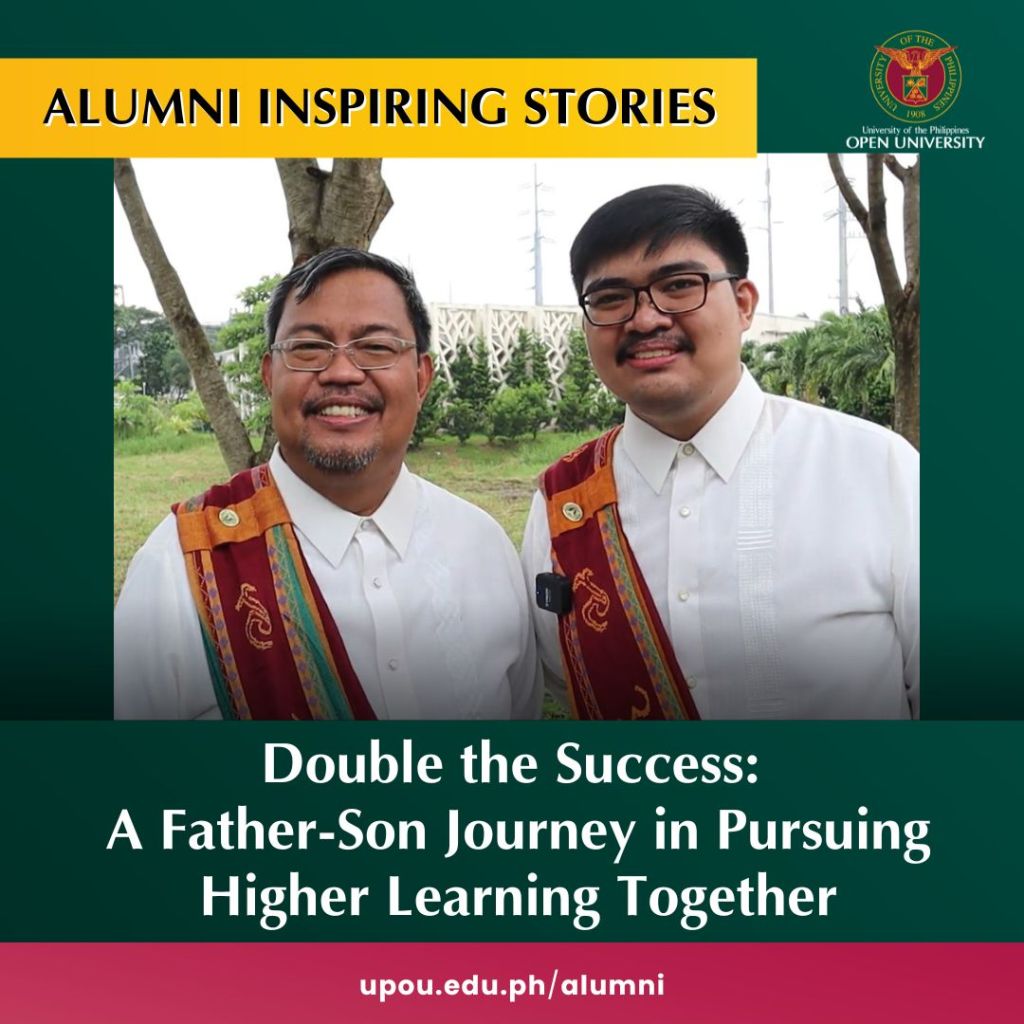
Ronald Hilaria and his son Ron David Hilaria share their positive experiences with the University of the Philippines Open University’s (UPOU) Open and Distance eLearning (ODeL) program.
Ronald, the head of his company’s human resources department, enrolled in UPOU’s Graduate Certificate in Distance Education program to better understand e-learning and implement it in his company’s corporate university. The knowledge he gained from the program helped him spearhead the establishment of an e-learning portal, which proved to be very useful during the pandemic. Ronald’s UPOU education also helped him advance his career and create opportunities for him and his son to bond over school requirements.
On the other hand, his son, Ron David Hilaria, was a student at UP Diliman who struggled to fit into the culture of a traditional university and found UPOU’s ODeL program to match his learning style better. He appreciated the flexibility of being able to control his schedule and do advanced study or fast-track the completion of his requirements. In 2019, Ron David enrolled in the Associate in Arts program at UPOU. He also appreciated that his father could better relate to him regarding school requirements. They could talk about their modules, the discussion forums they attended, and all the other things they were going through in their respective studies. His UPOU experience was an eye-opener for him and he was glad that he studied at UPOU for the past two years. Ron would continue with his distance education by taking up BAMS next.
Both father and son highly recommend UPOU’s ODeL program to people who are working and still want to pursue higher or advanced learning, as well as those who want to try something different from traditional university education.
UP Open University utilizes ODeL as its mode of teaching and learning, and its mission is to provide access to quality higher education to Filipinos everywhere. UPOU is open to students who are not able to join traditional and physical clases, since all teaching and learning is done online.
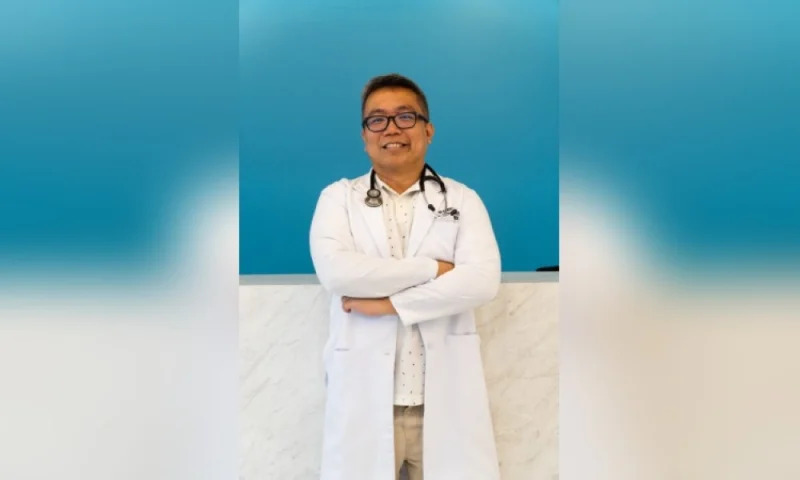
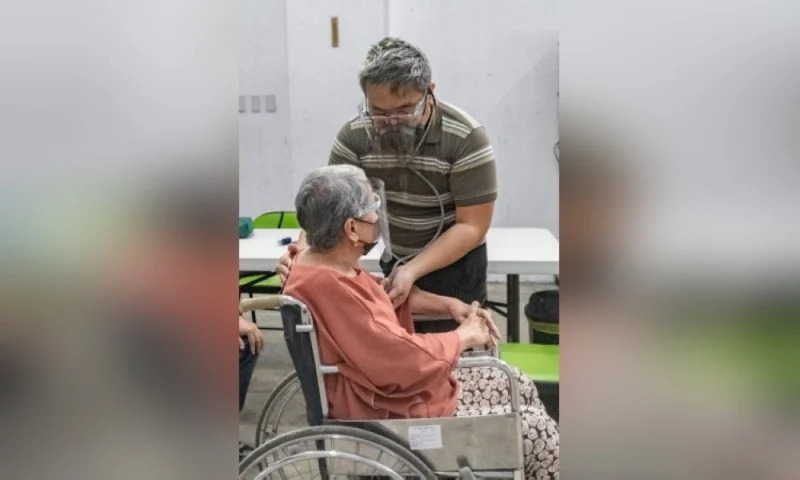
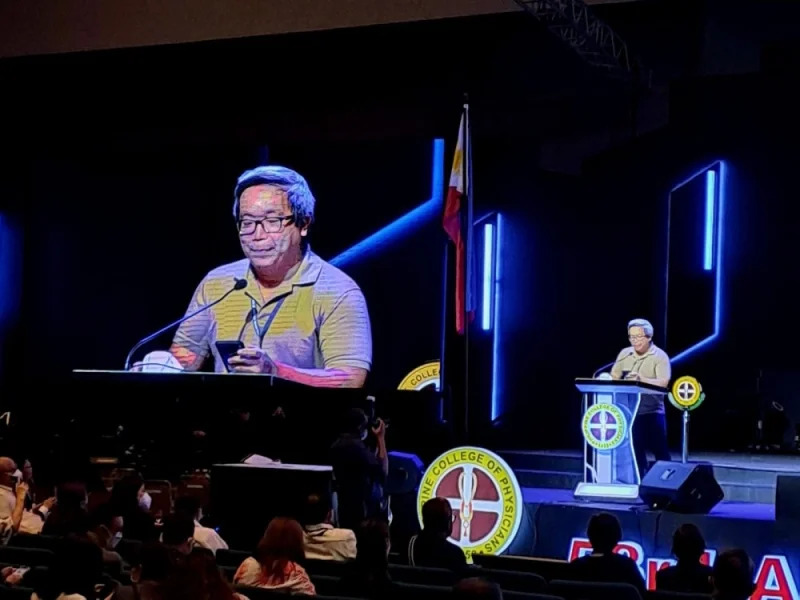
Dr. Bryan Albert T. Lim, M.D. FPCP, FPSMID is currently the Chief Medical Officer of Keralty Prime Cebu, Inc.During the pandemic, Dr. Lim continued to serve relentlessly at the frontline, serving countless patients and offering his expertise to both the public and private sector in forming systems and models that benefited the greater community. (Contributed photo)Dr. Bryan Albert Lim received the 2023 Distinguished Health Care Advocate Award at the Philippine College of Physicians National Convention on May 8, 2023, at the Philippine International Convention Center. (Contributed photo)
When the unprecedented health crisis struck in 2020, the world came to a standstill. Lives were abruptly disrupted and the bustling energy of “business as usual” gave way to global pause as societies confronted the harsh realities of the pandemic.
Defining the “new normal” was a by-line often used arbitrarily as communities scrambled to get back on track. It was amidst all this confusion that a few good men stood out, driven by an unwavering commitment and selfless compassion to continuously serve, despite the mounting fear and anxiety.
One of them is Dr. Bryan Albert T. Lim, an Infectious Disease specialist from Cebu who made bold strides in the healthcare industry. He offered different perspectives in approaching the pandemic and helped form policies that married both Science and systems with human compassion—all while continuing his medical practice, serving at the forefront during the pandemic.
With his distinguished academic background, having graduated Magna Cum Laude with a Bachelor of Science in Biology degree from the University of the Philippines (UP) Cebu and a Doctor of Medicine from the UP College of Medicine, Dr. Lim has consistently displayed a commitment to excellence in his career.
With a subspecialty in Infectious Diseases from the Philippine General Hospital, Dr. Lim’s contributions have been widely acknowledged by various sectors. His groundbreaking efforts in helping establish systems and models in addressing the pandemic with both the private and public sector earned him various recognitions from various local and national institutions.
And as the newly installed chief medical officer of Keralty Prime Cebu, Dr. Lim has been instrumental in pioneering transformative initiatives in primary healthcare, shaping the way primary care patient-centered services are delivered to the community.
Most recently, the Philippine College of Physicians (PCP), an affiliate society of the Philippine Medical Association and a member-society of the International Society of Internal Medicine, recognized Dr. Lim asthe PCP’s Distinguished Health Care Advocate for 2023, chosen from among 9,111 members.
Being among one of the youngest doctors to have received this award, Dr. Lim’s dedication to his patients and the community is rooted in his personal experiences and core values. Reflecting on the transformative power of compassion, kindness, and scientific excellence, he shared: “I have learned firsthand the immense impact that dedicated healthcare professionals can have. It is this profound realization that has fueled my commitment to serve and offer compassion to those in need.”
Throughout his career, Dr. Lim has encountered significant challenges that have shaped his perspective and reinforced the importance of collaboration and empathy. Recognizing the role of healthcare professionals as collaborators and partners during the pandemic, he emphasizes the value of humility and the need to listen attentively and to work collaboratively.
“We don’t have all the answers. It’s tempting at times to believe that we, doctors, are the experts in all health issues, but solutions can come from the unlikeliest of places. The pandemic wasn’t only a health crisis, it was also a social crisis. As doctors and health advocates, our role goes beyond our medical expertise; it is to guide, collaborate, and most importantly, to listen.”
He continued: “Being a health advocate means embracing the responsibility of considering multiple perspectives and designing solutions that benefit everyone. It is about understanding that healthcare goes beyond the confines of a hospital or clinic—it is about making a positive impact on the lives of individuals and communities as a whole.”
When asked about what struck him most as his greatest lesson during the pandemic, Dr. Lim shared a personal story: “Be kind; everyone is struggling. It is important that we offer our help and assist with humility, patience, and always with compassion. When my father died from Covid early in the pandemic, I almost lost my will to work. My heart was drained, there was nothing left to give, and I had planned to quit. But I found sincere, silent compassion in the unlikeliest of places and that fueled my desire to serve even more. The most difficult times taught me that it is possible to transform pain to passion, grief to gratitude, suffering to grace. “
Dr. Lim continues to spearhead transformative patient-centered healthcare initiatives. His journey serves as an inspiration to his colleagues and the wider healthcare community. His relentless pursuit of excellence and dedication to improving the well-being of others make him a true healthcare trailblazer.
With his heart in the right place, Dr. Lim inspires hope, healing, and a brighter future for all. (SunStar Specials)
You may choose not to have a unique web analytics cookie identification number assigned to your computer to avoid the aggregation and analysis of data collected on this website.
To make that choice, please click below to receive an opt-out cookie.